Nature sometimes has more imagination than any science fiction movie. Here are 20 very real animals that challenge what you think you know about the living world. From the tardigrade that survives in space to the fish that walks, these species exist, and most of us have never heard of them.
Extreme survivors
The tardigrade. Also called “water bear.” One millimeter long, eight legs, and the ability to survive almost anything. The vacuum of space, temperatures from minus 200 to plus 150 degrees Celsius, radiation 1,000 times the lethal dose for humans, ten years without water. The European Space Agency sent it into orbit in 2007 without a capsule, and it came back alive. When conditions get extreme, it enters cryptobiosis, dehydrated to 97% and functionally dead until the environment becomes viable again.
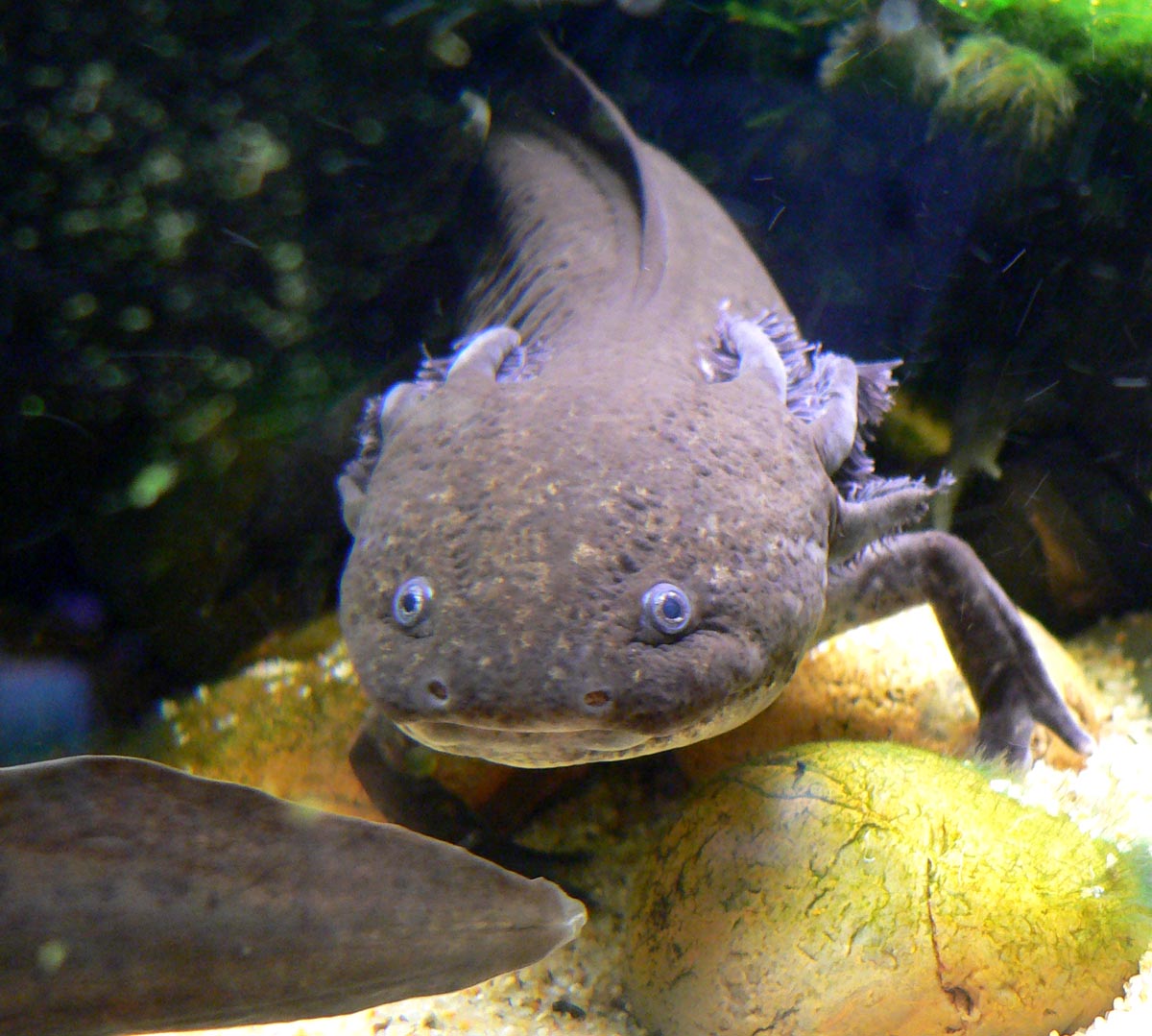
The axolotl. A Mexican salamander that never metamorphoses. It stays in larval form its entire life, with feathery external gills. Its key trait is regeneration: an axolotl can have a leg, a fin, part of its heart or brain cut off, and everything regrows identically in a few weeks. Medical research watches it closely to understand tissue regeneration.
The immortal jellyfish (Turritopsis dohrnii). Able to return to its juvenile stage when it ages or is injured. Theoretically infinite cycle. The only way to kill it is to eat it or remove it from water.
Weird in their own category
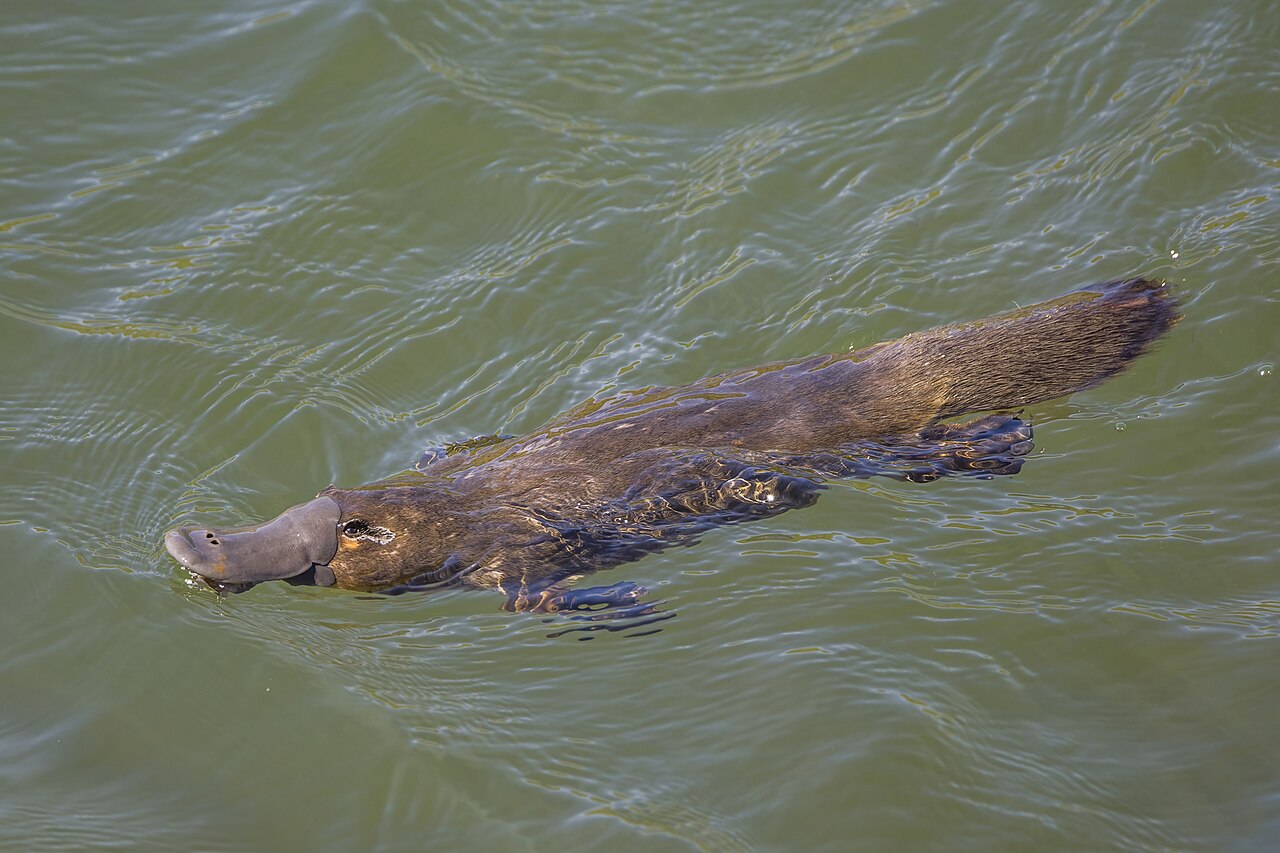
The platypus. A mammal that lays eggs, has a duck bill, webbed feet, a beaver tail, and secretes venom through spurs on the hind legs of males. When the first specimens were sent to Europe in the 18th century, British scientists thought it was a taxidermy hoax.
The pangolin. The only mammal covered in scales. When scared, it curls into a ball, its scales forming an almost impenetrable armor even for a lion. Also the most trafficked mammal in the world because of its scales used in traditional medicine.
The okapi. Discovered only in 1901. Looks like a zebra-giraffe cross, but is actually a close cousin of the giraffe. Lives in the dense forests of the DRC. Its tongue is so long it can reach its ears.
The pink fairy armadillo. 10 centimeters, lives in Argentina, pale pink color from the visible vascularization under its armor. Almost impossible to observe in the wild, listed as endangered.
Strange marine creatures
The vampire squid. Lives between 600 and 1,200 meters deep. Not really a squid, not really an octopus, it is the only representative of a separate order. Capable of emitting luminous clouds to escape predators.
The stonefish. The most venomous marine animal in the world. Camouflages perfectly as a rock on tropical sea floors. Stepping on one injects a venom that causes extreme pain and can kill in two hours without an antidote.
The leafy sea dragon. An Australian seahorse that looks like a walking strand of seaweed. Camouflage so effective predators barely see it.
The blobfish. Voted “the world’s ugliest fish” in an online poll in 2013, when at its original depth (up to 1,200 meters) it has a perfectly normal shape. Decompression on the way up gives it that characteristic gelatinous look.
The goblin shark. Lives down to 1,300 meters. A projectable jaw that shoots out of its head to catch prey. Seen only a few dozen times since its discovery in 1898.
Insects beyond the norm
The bombardier beetle. When attacked, it mixes two chemical compounds in a chamber in its abdomen, producing a thermal explosion at 100 degrees Celsius projected at the attacker. The only known chemical defense reaction in an animal involving a real explosion.
The honeypot ant. Some workers literally serve as storage: their abdomen swells until it reaches the size of a grape, filled with nectar. They spend their lives hanging from the nest ceiling, serving as a collective pantry.
The Hercules beetle. One of the largest insects in the world, 17 centimeters including horns. Males can lift up to 850 times their body weight.
Amphibians and reptiles in a class apart
The glass frog. Its belly skin is completely transparent, you can see its internal organs directly. Lives in Central America.
The Madagascar dwarf chameleon (Brookesia micra). 29 millimeters as an adult. Fits on the tip of a match.
The paradise flying snake. Capable of moving by gliding between trees by flattening and undulating. Aerodynamics studied by NASA for drone projects.
Mammals we never see
The saola. Nicknamed “the Asian unicorn,” discovered only in 1992 in Vietnam and Laos. No one has ever observed it alive in the wild for more than a few minutes. Unknown population, probably a few hundred individuals.
The naked mole-rat. A social mammal that lives like ants: one queen, workers, an underground colony. Insensitive to pain. Resistant to cancer. Lives up to 30 years, while a normal rat lives 3. Heavily studied for aging research.
The aye-aye. A nocturnal lemur from Madagascar. Extremely elongated middle finger used to extract larvae from wood. Local reputation as an evil animal, which contributes to threatening it.
Why we don’t know them
Most of these animals share three traits. They live in habitats hard to access (great depths, dense forests, underground). They are rare or very localized. Their discovery is recent, sometimes less than 50 years ago. Biodiversity remains largely unexplored: an estimated 86% of land species and 91% of marine species have not yet been described.
Worth reading: 50 animal species worth knowing, endangered species and the most dangerous animals in the world. SAPIRO offers quizzes on 600 species, from the most familiar to the strangest, with an explanation behind each question.