
Within a few square kilometres, Paris packs in a density of monuments that few cities can match. Here is a clear map of them, grouped by family, so you know what you are looking at and why it matters.
The must-sees
These are the silhouettes everyone recognises, even people who have never set foot in the capital.
-
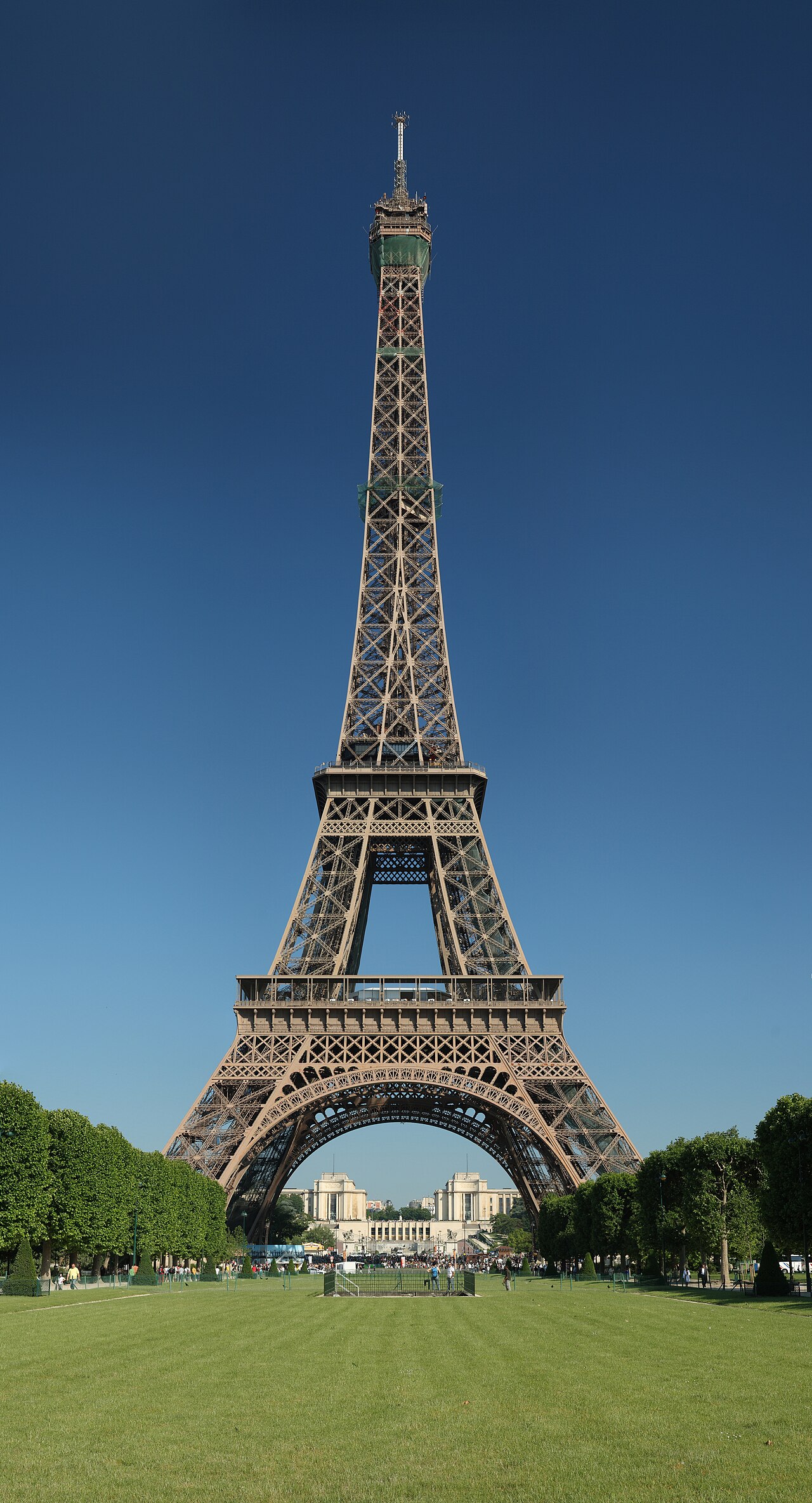
Eiffel Tower — Built by Gustave Eiffel for the 1889 World’s Fair, it now stands about 330 metres tall with its antennas. Meant as a temporary structure, it was supposed to be dismantled after twenty years; its reuse as a radio-telegraph antenna saved it.
-
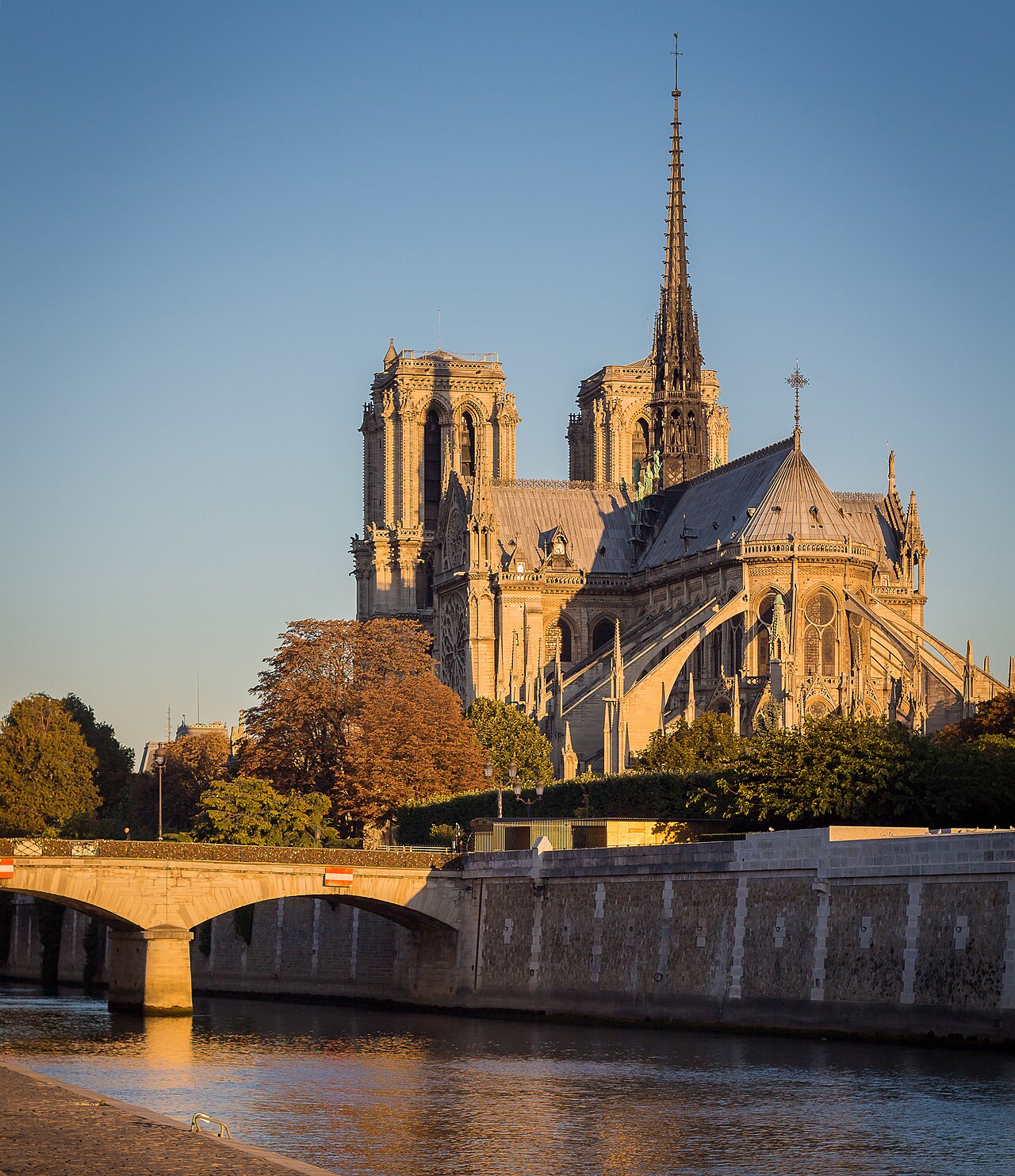
Notre-Dame de Paris — A Gothic cathedral whose construction began in 1163 and stretched across nearly two centuries. The April 2019 fire gutted the spire and the roof timbers. After more than five years of restoration, it reopened to the public in December 2024, with a cleaned façade and interiors returned to their original brightness.
-
Arc de Triomphe — Commissioned by Napoleon in 1806 to honour the Grande Armée and finished in 1836 under Louis-Philippe. It commands the Place de l’Étoile, where twelve avenues meet, and since 1921 it has sheltered the Tomb of the Unknown Soldier, its flame rekindled every evening.
-
Sacré-Cœur — A Romano-Byzantine basilica perched atop the Montmartre hill, the highest natural point in Paris. Its construction ran from 1875 to 1914. The Château-Landon stone whitens in the rain, which keeps its surface permanently pale.
-
The Louvre — A former royal palace turned museum in 1793, it is the most visited museum in the world, with close to nine million visitors a year. The glass pyramid designed by the Chinese-American architect Ieoh Ming Pei, unveiled in 1989, marks its entrance and was fiercely debated before becoming a fixture.
Historic and religious monuments
Photographed less often than the Eiffel Tower, these buildings carry much of the country’s political and spiritual history.
-
Panthéon — First a church dedicated to Saint Geneviève, ordered by Louis XV, the neoclassical building was turned during the Revolution into a resting place for the nation’s great figures. Voltaire, Rousseau, Victor Hugo, Marie Curie and Joséphine Baker, who entered in 2021, all lie here.
-
Sainte-Chapelle — A gem of Rayonnant Gothic raised by Saint Louis in the mid-13th century to house relics of the Passion. Its fifteen stained-glass windows rise more than fifteen metres and display over a thousand biblical scenes. On a clear day, the effect is overwhelming.
-
Conciergerie — A surviving fragment of the old Capetian royal palace on the Île de la Cité, once home to a long line of European monarchs. Turned into a prison during the Revolution, it held Marie-Antoinette before her execution in 1793. Its Hall of the Men-at-Arms is one of the largest surviving Gothic civil halls in Europe.
-
Les Invalides — A complex founded by Louis XIV in 1670 to care for wounded soldiers. Its gilded dome crowns the church where Napoleon I rests, his red quartzite tomb installed in 1861. The site also houses the Army Museum.
-
Opéra Garnier — Inaugurated in 1875 and designed by Charles Garnier, it is the manifesto of the Second Empire style: marble, gilding, a grand ceremonial staircase. Marc Chagall repainted its ceiling in 1964, a deliberate clash between academic splendour and modern art.
Viewpoints and modernity
Paris did not freeze in the 19th century. Three more recent works prove it, and offer different angles on the city in the bargain.
-
Montparnasse Tower — Completed in 1973, this 210-metre office tower was long criticised for its dark bulk. It keeps one advantage: from its terrace you get one of the few views that includes the Eiffel Tower itself.
-
Centre Pompidou — Opened in 1977 and designed by Renzo Piano and Richard Rogers, it wears its pipes and escalators on the outside, a building turned inside out. It holds the National Museum of Modern Art. A long renovation closure is planned from 2025.
-
Grande Arche de la Défense — Inaugurated in 1989 for the bicentenary of the Revolution, this hollow cube of white marble extends the historic axis that begins at the Louvre and runs through the Arc de Triomphe. A monumental window opening onto western Paris.
To set these buildings in a wider context, see our overview of the monuments of France and our selection of 30 famous monuments around the world. For the reference page, head to the full monuments hub. And if you want to test what stuck, SAPIRO offers a world monuments quiz.
Frequently asked questions
What is the most visited monument in Paris?
The Louvre leads with close to nine million visitors a year, making it the most visited museum on the planet. Among outdoor ticketed monuments, the Eiffel Tower draws roughly six to seven million people annually.
How tall is the Eiffel Tower?
The Eiffel Tower stands about 330 metres tall including its antennas, up from 312 metres when it was built in 1889. It remains the tallest structure within central Paris.
When did Notre-Dame de Paris reopen after the fire?
The cathedral reopened in December 2024, a little over five years after the April 2019 fire that destroyed the spire and much of the timber roof. The restoration relied on hundreds of skilled craftspeople.
Which Paris monuments have the best views?
For a panorama, the usual picks are the Eiffel Tower, the Arc de Triomphe and the forecourt of the Sacré-Cœur. The Montparnasse Tower has one edge: it is the rare high point from which you can actually see the Eiffel Tower in the skyline.