
Paris hogs the spotlight, but France scattered its masterpieces everywhere. Abbeys rising from the sea, fortresses, Renaissance châteaux, Roman aqueducts still standing after two thousand years: here are the monuments worth knowing once you leave the capital.
Medieval marvels
The Middle Ages left France some of the most spectacular buildings in Europe. Three stand out.
-
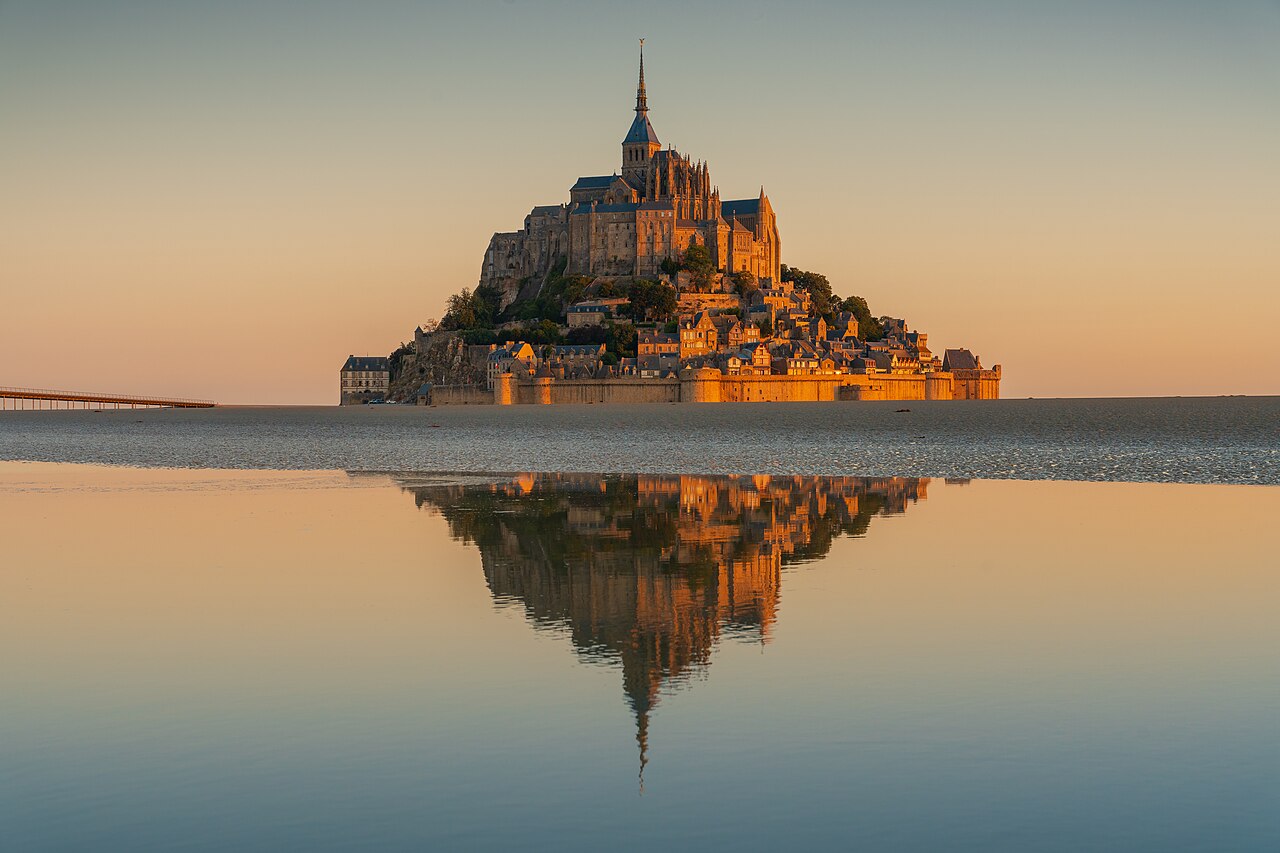
Mont-Saint-Michel — Normandy — An abbey perched on a rocky islet that the tide cuts off from the mainland. Nicknamed the “Wonder of the West,” it has drawn pilgrims since the eighth century and remains one of the most photographed sites in the country.
-
City of Carcassonne — Occitanie — An entire fortified town, ringed by a double wall and 52 towers. Restored in the nineteenth century by Viollet-le-Duc, it offers the striking illusion of a medieval stronghold frozen in time.
-
Palais des Papes — Avignon — The largest Gothic palace in Europe, built in the fourteenth century when the papacy had left Rome for Provence. Nine popes lived here, in a building that is as much fortress as palace.
Châteaux and palaces
You cannot talk about French monuments without the châteaux. Between the royal excess of Versailles and the Renaissance jewels of the Loire, the country has more of them than anywhere else.
-
Palace of Versailles — Île-de-France — A former hunting lodge that Louis XIV turned into the symbol of absolute monarchy. The Hall of Mirrors, the gardens designed by Le Nôtre, and the fountains make it the most visited château in France by a long way.
-
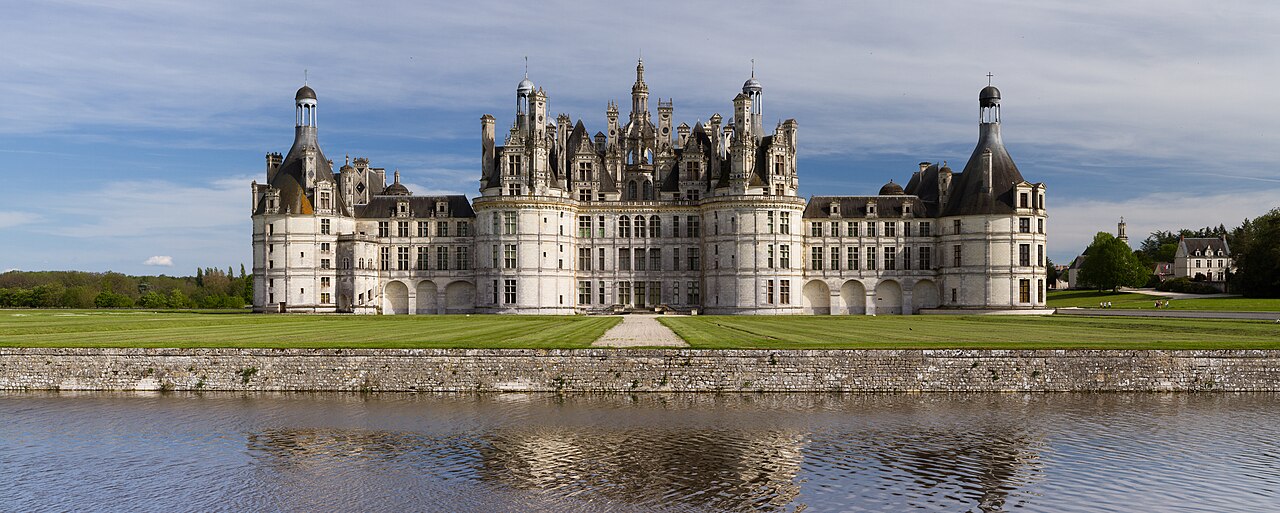
Château de Chambord — Centre-Val de Loire — The largest of the Loire châteaux, commissioned by François I. Its double-helix staircase, where two people can climb and descend without ever crossing paths, is attributed to Leonardo da Vinci. Four hundred and forty rooms, and no one ever really lived there for long.
-
Château de Chenonceau — Centre-Val de Loire — Built across the River Cher, its arches span the water. It is known as the “Ladies’ Château”: Diane de Poitiers and then Catherine de Médicis left their mark on it. It is the most visited privately owned château in the country.
The Loire Valley does not stop there. Inscribed as a whole on the World Heritage list, it also lines up Amboise, Villandry with its gardens, Cheverny, and Azay-le-Rideau. Enough to fill several days.
Roman heritage
The south of France was part of Roman Gaul, the province of Narbonensis, and keeps ancient monuments in rare condition. Some are still in use.
-
Pont du Gard — Occitanie — A three-tiered Roman aqueduct, nearly 50 metres high, that carried water toward Nîmes. Built in the first century without mortar, it crosses the Gardon with a precision that defies time.
-
Arena of Nîmes — Occitanie — A Roman amphitheatre among the best preserved anywhere, which once held nearly 24,000 spectators. Twenty centuries later, it still hosts concerts and shows.
-
Maison Carrée — Nîmes — A near-intact Roman temple whose purity of proportion inspired countless architects, including Thomas Jefferson for the Virginia State Capitol. Added to the UNESCO list in 2023.
-
Roman theatre of Orange — Provence-Alpes-Côte d’Azur — Its stage wall, 103 metres long and 37 metres high, is one of the few preserved intact in the Roman world. Louis XIV called it “the finest wall in my kingdom.” It still hosts an opera festival every summer.
Modern and natural monuments
France does not live on ancient stone alone. Its engineering and its landscapes also produce sites that have become emblematic.
-
Millau Viaduct — Occitanie — The tallest road bridge in the world, with one pylon reaching 343 metres, higher than the Eiffel Tower. Designed by engineer Michel Virlogeux and architect Norman Foster, opened in 2004, it crosses the Tarn valley like a line drawn taut between the clouds.
-
Dune of Pilat — Nouvelle-Aquitaine — The tallest sand dune in Europe, more than 100 metres high, forever shifting at the edge of the Arcachon basin. It is not a built monument, but it draws as many visitors as many châteaux do, and counts as natural heritage in its own right.
With more than fifty sites on the UNESCO World Heritage list, France ranks among the best-endowed countries on the planet. That density comes from a long history and varied landscapes, from the Normandy coast in the north to the Mediterranean in the south.
Want to test your knowledge? The SAPIRO app offers general knowledge quizzes that cover these monuments and many more.
To go further, browse our complete guide to monuments of the world. And depending on your taste, continue with the monuments of Paris, a tour of the world’s famous castles and palaces, or the list of UNESCO World Heritage sites.
Frequently asked questions
How many French sites are on the UNESCO World Heritage list?
France has more than 50 sites inscribed on the UNESCO World Heritage list, placing it among the best-endowed countries in the world. These range from single landmarks, such as Mont-Saint-Michel or the Pont du Gard, to entire ensembles, such as the Loire Valley and its châteaux.
What is the most visited French monument outside Paris?
The Palace of Versailles leads by a wide margin, drawing several million visitors a year. Mont-Saint-Michel and the medieval city of Carcassonne are also among the country’s most popular sites.
Which Loire châteaux should you visit first?
Chambord, for its sheer scale and its double-helix staircase attributed to Leonardo da Vinci, and Chenonceau, the château built across the River Cher. They are the two most iconic, though the valley holds dozens more.
Where can you see Roman remains in France?
The south of the country has the finest ancient monuments: the Pont du Gard, the arena and the Maison Carrée in Nîmes, and the Roman theatre of Orange, one of the best preserved in the entire Roman world.