
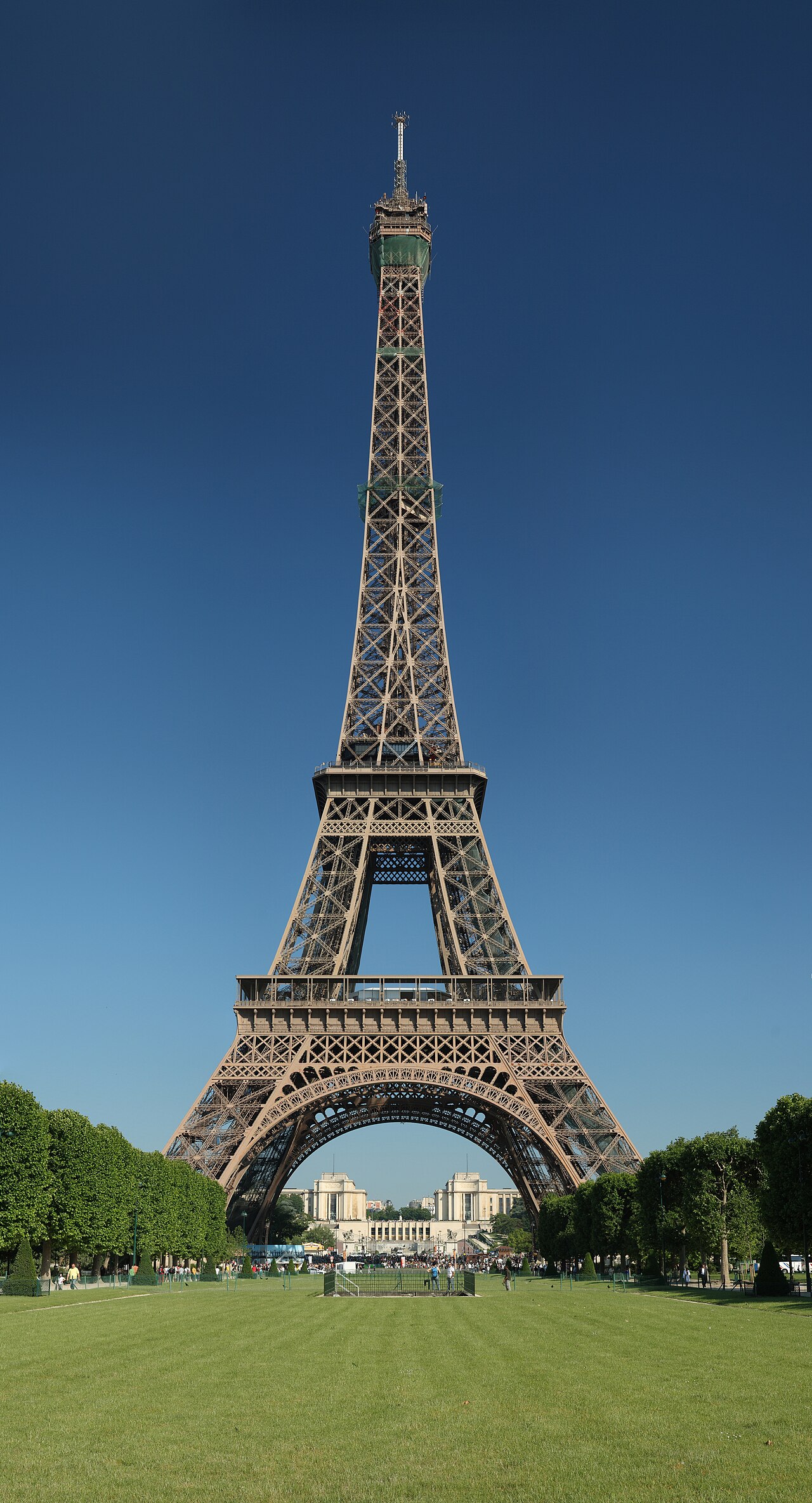
A handful of monuments have become visual shorthand for entire countries: one silhouette is enough to say Paris, Pisa or Rio. Here are thirty of the most recognisable, sorted by continent, with the essentials to remember about each.
Europe
Europe packs a rare density of landmark monuments, from ancient ruins to nineteenth-century feats of engineering.
- Eiffel Tower — Paris, France — a 330-metre iron tower built for the 1889 World’s Fair.
- Colosseum — Rome, Italy — an ancient amphitheatre that could hold around 50,000 spectators for gladiatorial games.
- Sagrada Família — Barcelona, Spain — Gaudí’s basilica, under construction since 1882 and still unfinished.
- Big Ben — London, United Kingdom — the bell, and by extension the clock tower of the Palace of Westminster, completed in 1859.
- Tower Bridge — London, United Kingdom — a Victorian bascule bridge with two neo-Gothic towers, opened in 1894.
- Acropolis and Parthenon — Athens, Greece — a fifth-century BCE Doric temple dedicated to the goddess Athena.
- Leaning Tower of Pisa — Pisa, Italy — the cathedral’s bell tower, tilting because of unstable ground.
- Brandenburg Gate — Berlin, Germany — an eighteenth-century neoclassical arch that became a symbol of German reunification.
- Saint Basil’s Cathedral — Moscow, Russia — a church with colourful onion domes on Red Square, beside the Kremlin.
- Atomium — Brussels, Belgium — an iron lattice shaped like a unit cell of a crystal magnified 165 billion times, built for Expo 58.
Asia
From the Near East to the Pacific, Asia lines up monuments on an often staggering scale.
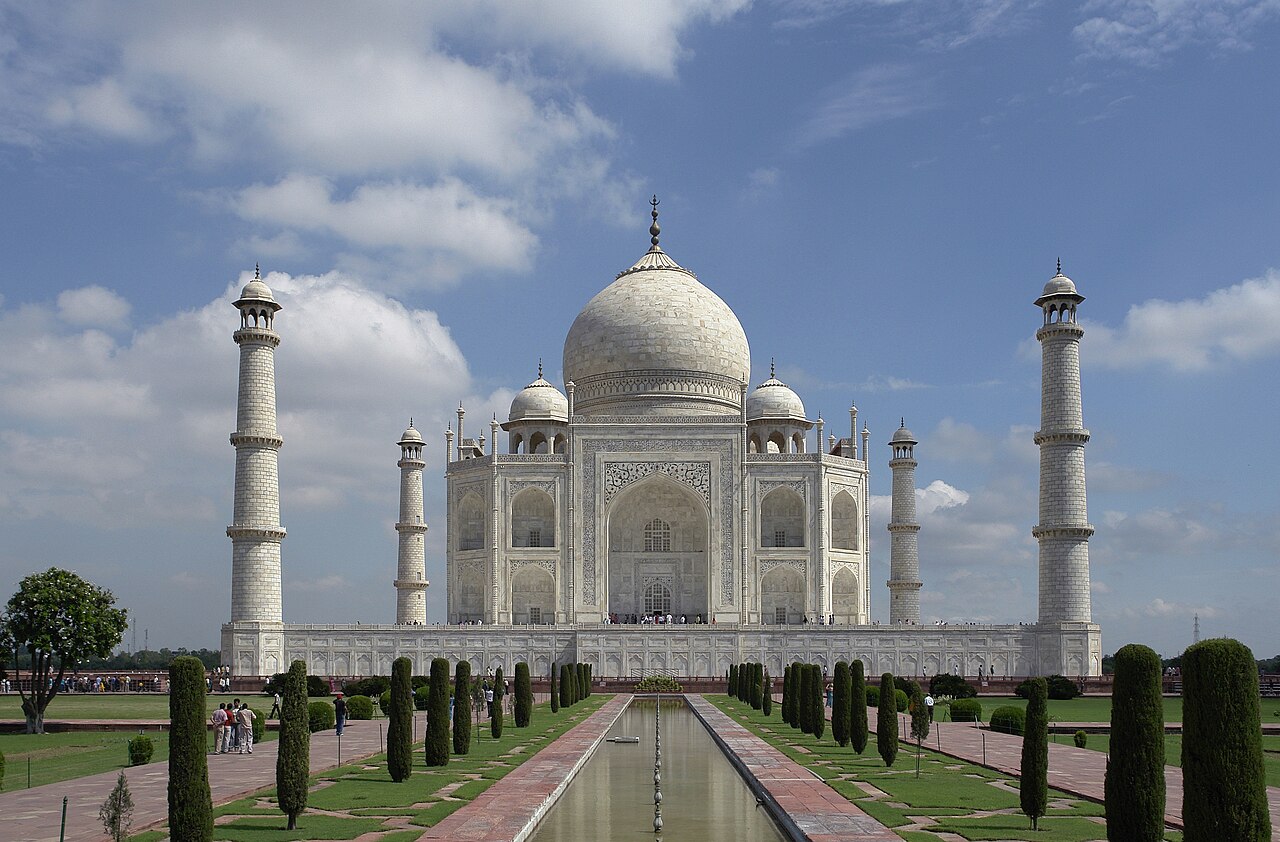
- Taj Mahal — Agra, India — a white marble mausoleum built in the seventeenth century by the Mughal emperor Shah Jahan for his wife.
- Great Wall — northern China — a network of fortifications thousands of kilometres long, built over several centuries.
- Forbidden City — Beijing, China — the imperial palace of the Ming and Qing dynasties, with nearly a thousand buildings.
- Angkor Wat — Siem Reap, Cambodia — a vast twelfth-century Khmer temple, the largest religious monument in the world by area.
- Golden Temple — Amritsar, India — Sikhism’s holiest shrine, clad in gold leaf and surrounded by a sacred pool.
- Petronas Towers — Kuala Lumpur, Malaysia — 452-metre twin skyscrapers, the tallest in the world from 1998 to 2004.
- Burj Khalifa — Dubai, United Arab Emirates — the tallest structure on Earth, reaching 828 metres.
- Leshan Giant Buddha — Sichuan, China — a 71-metre Buddha carved into a cliff in the eighth century.
- Mount Fuji and its shrines — Honshū, Japan — a sacred volcano ringed by listed temples and pilgrimage sites.
The Americas
The Americas blend pre-Columbian feats with industrial icons.
- Statue of Liberty — New York, United States — a gift from France unveiled in 1886, designed by Bartholdi and Eiffel.
- Machu Picchu — Cuzco region, Peru — a fifteenth-century Inca city set at around 2,430 metres in the Andes.
- Chichén Itzá — Yucatán, Mexico — a Maya site crowned by the Kukulcán pyramid, known as El Castillo.
- Christ the Redeemer — Rio de Janeiro, Brazil — a 30-metre statue standing atop Corcovado since 1931.
- Golden Gate Bridge — San Francisco, United States — an orange-red suspension bridge opened in 1937, 2.7 kilometres long.
- Mount Rushmore — South Dakota, United States — the faces of four presidents carved into granite.
- United States Capitol — Washington, United States — the seat of Congress, topped by its famous white dome.
Africa and the Middle East
The cradle of some of humanity’s oldest monuments, this region holds sites of unmatched longevity.
- Pyramids of Giza — Cairo, Egypt — three royal pyramids of the Old Kingdom, including the Great Pyramid of Khufu.
- Great Sphinx of Giza — Cairo, Egypt — a monumental statue with a lion’s body and a human head, guarding the plateau.
- Petra — Maan, Jordan — a Nabataean city carved into rose-coloured rock, famous for the Treasury façade (Al-Khazneh).
- Hassan II Mosque — Casablanca, Morocco — a building with a 210-metre minaret, partly set over the ocean.
Oceania
Sydney holds two silhouettes that have become the face of Australia.
- Sydney Opera House — Sydney, Australia — a performance venue with concrete sail-shaped roofs, opened in 1973 and designed by Jørn Utzon.
- Sydney Harbour Bridge — Sydney, Australia — a steel arch bridge nicknamed “the Coathanger”, opened in 1932.
To go further, browse our guide to the world’s monuments, compare these sites with the Seven Wonders of the World, or check the ranking of the most visited monuments. To move from buildings to artworks, see our tour of the famous sculptures that often adorn these sites. And to test what you remember, try the world monuments quiz.
Frequently asked questions
What is the most visited monument in the world?
The Eiffel Tower is often named the most visited paid monument on the planet, drawing close to seven million visitors a year. Other sites such as the Forbidden City in Beijing welcome more people overall, but their entry is partly free or very cheap.
Which monuments are among the New Seven Wonders of the World?
The list chosen in 2007 includes the Great Wall of China, Petra, the Christ the Redeemer statue in Rio, Machu Picchu, Chichén Itzá, the Colosseum in Rome and the Taj Mahal. The Great Pyramid of Giza was added as an honorary member.
Which is the oldest monument on this list?
The Giza pyramids are by far the oldest: the Great Pyramid of Khufu was completed around 2560 BCE, more than four and a half thousand years ago. It is the only one of the Seven Wonders of the Ancient World still standing.
How can I learn the world’s great monuments in a fun way?
Grouping them by region and keeping one key fact per monument helps a lot. To turn revision into a game, a quiz like the one from SAPIRO lets you test your memory on monuments continent by continent and fill the gaps without getting bored.