
Monuments turn up everywhere in a quiz: a name, a photo, a date you’re meant to recall. It isn’t pointless memorising. It’s a corner of general knowledge where a handful of tidy facts earn a lot of points. Here’s what to revise, what not to muddle up, and how to go about it.
Why monuments show up in exams
A monument packs a huge amount into a single name. Say “Colosseum” and you’ve summoned Rome, the Empire, ancient architecture, the games. Say “Taj Mahal” and you’ve got Mughal India, white marble, a seventeenth-century mausoleum. For an examiner that’s an efficient question: one image tests geography, history and art history at once.
In school exams, monuments anchor history and geography questions and feed essay examples. In pub quizzes and TV game shows, “name that landmark” is a fixture of the genre. In broader general knowledge tests, the same handful of sites keeps reappearing. The format shifts; the underlying skill doesn’t: place it, date it, recognise it.
The good news is that the stock of genuinely unavoidable monuments is small. We’re talking a few dozen sites, not thousands. The job has clear edges.
The must-know list
Start with the closed lists, the ones you can finish in an evening.
The Seven Wonders of the Ancient World. The Great Pyramid of Giza, the Hanging Gardens of Babylon, the Statue of Zeus at Olympia, the Temple of Artemis at Ephesus, the Mausoleum at Halicarnassus, the Colossus of Rhodes and the Lighthouse of Alexandria. The detail to lock in: only one still stands, the Great Pyramid of Giza. That’s exactly the sort of precision a quiz rewards.
The New Seven Wonders of the World. Chosen by public vote in 2007: the Great Wall of China, Petra in Jordan, Christ the Redeemer in Rio, Machu Picchu in Peru, Chichén Itzá in Mexico, the Colosseum in Rome and the Taj Mahal in India. One list, seven monument-country pairs: learnable in a single sitting.
The great British and European landmarks. Big Ben and the Palace of Westminster, Stonehenge, the Tower of London, Edinburgh Castle at home; the Eiffel Tower, the Acropolis, the Brandenburg Gate, the Leaning Tower of Pisa across the Channel. For each, pin down a city, a century and a purpose.
A few emblematic UNESCO sites. The Acropolis in Athens, the Alhambra in Granada, Angkor in Cambodia, Abu Simbel in Egypt, the Sagrada Família in Barcelona. The World Heritage list is vast, but a small number of sites accounts for most of the questions.
At least one landmark per continent. Africa: the Pyramids of Giza. Asia: the Great Wall, the Taj Mahal, Angkor. The Americas: Machu Picchu, the Statue of Liberty, Christ the Redeemer. Oceania: the Sydney Opera House. Europe: the Colosseum, the Eiffel Tower, Big Ben. This grid stops you leaving a whole continent blank on the day.
To go wider, our monuments hub and our pick of 30 famous monuments around the world cover these landmarks in detail, and our guide to the Seven Wonders of the World walks through both lists.
The classic traps
Monument questions often hinge on a specific mix-up. Spot them before they spot you.
Pyramids of Giza versus Teotihuacan. The word “pyramid” sets the trap. Giza’s are Egyptian, in Africa, around 2500 BC, built as tombs. Those at Teotihuacan, in Mexico, are Mesoamerican, far more recent, and served ritual purposes. Continent, era, function: nothing in common.
Colosseum versus Pantheon in Rome. Two ancient Roman monuments, two jobs. The Colosseum is an amphitheatre for combat and spectacle; the Pantheon is a domed temple. And Rome’s Pantheon is not Paris’s Panthéon, which houses the nation’s great figures.
Big Ben versus the clock tower. Big Ben is the bell, strictly speaking, not the tower or the Palace of Westminster. The distinction comes up again and again.
The Statue of Liberty: a French gift. People assume it’s purely American. It was designed by Bartholdi and given by France to the United States in 1886, with an internal structure engineered by Gustave Eiffel.
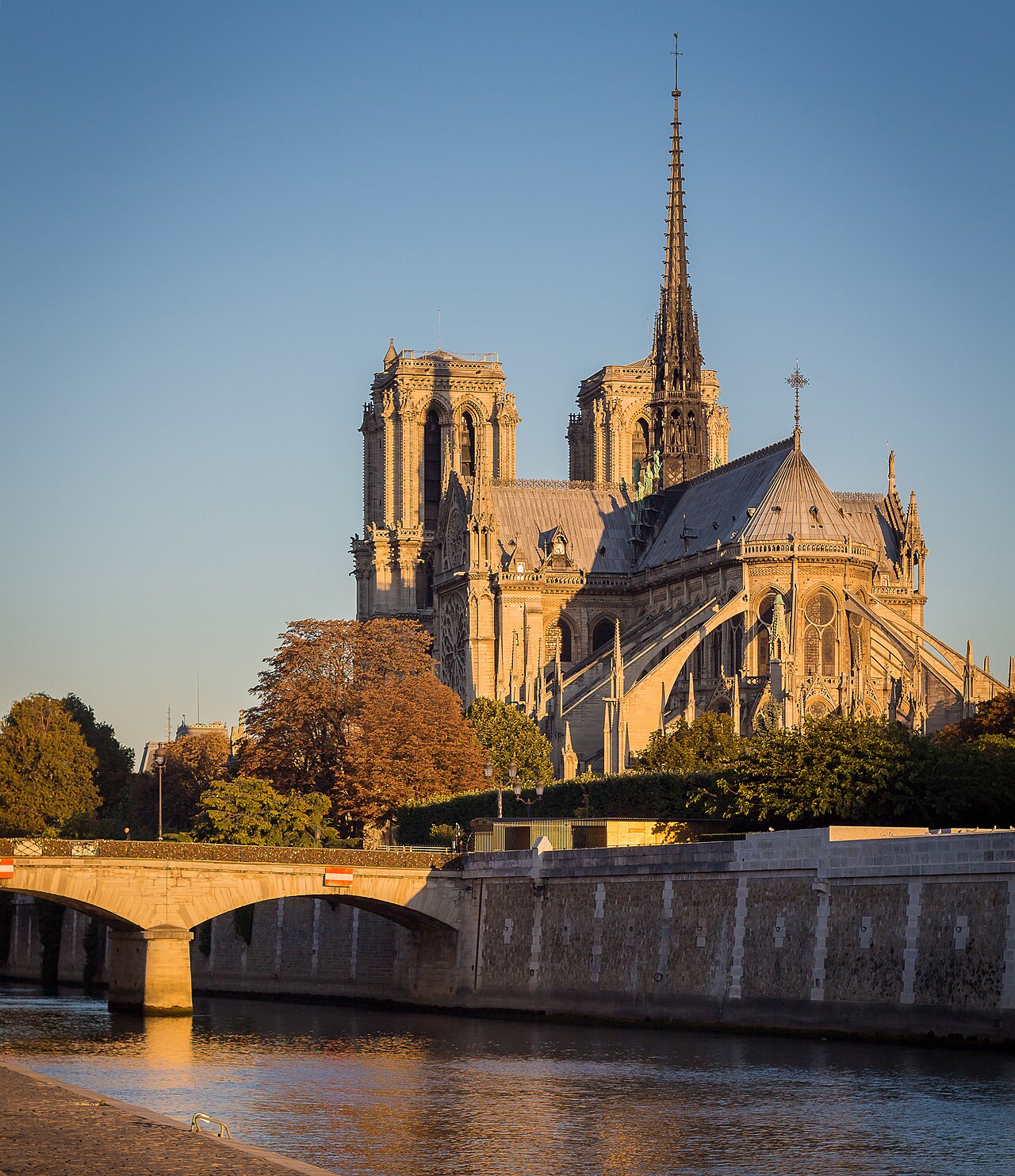
Notre-Dame versus the Sacré-Cœur. Both are Parisian churches, but they couldn’t be more different: one a twelfth-century Gothic cathedral on the Île de la Cité, the other an early-twentieth-century Romano-Byzantine basilica up on Montmartre.
To practise sniffing out these traps, the world monuments quiz is built around exactly these confusions.
A revision method
Memorising monuments in isolation won’t hold. Connect them.
Make cards by country or by era. A Britain card, an Ancient World card, a Renaissance card. On each, the same trio: monument name, place, century or civilisation. Cross-referencing the two angles fixes the same fact twice, through geography and through chronology.
Space your reviews. One re-read the next day, one three days later, one the following week. This spaced repetition embeds what last-minute cramming lets slip. Ten minutes a day beats a single long afternoon the night before.
Test yourself actively. Re-reading feels like knowing. Quizzing shows what you actually don’t know. Cover the answer, place the monument, then check. The general knowledge quizzes from SAPIRO turn these lists into short rounds and help you find the gaps before the exam.
Match the angle to your test. For school and general exams, tie monuments to the history and geography topics on your syllabus. For pub quizzes, lean into the odd facts and the close calls examiners love. The same monument is revised differently depending on what you’ll be asked.
Done well, the whole thing fits into a few weeks. You’ll never again hesitate between a cathedral and a basilica when it counts.
Frequently asked questions
Which monuments come up most often in quizzes and exams?
The big global and European landmarks: the Eiffel Tower, the Colosseum, the Taj Mahal, the Great Wall, the Pyramids of Giza, plus Big Ben and the best-known UNESCO sites. Quiz writers love pairing each one with a country, a city, a century or an architectural style.
Do I need to know the Seven Wonders of the World by heart?
Yes, both lists. The seven ancient wonders (only the Great Pyramid of Giza still stands) turn up regularly, and the modern list chosen in 2007 underpins a lot of general knowledge questions.
How do I avoid confusing the Pantheon and the Colosseum?
Both are ancient Roman buildings, but their jobs differ. The Colosseum is an amphitheatre built for combat and spectacle; the Pantheon is a domed temple. Function is the fastest way to keep them apart.
How long does it take to revise monuments?
A few weeks is plenty if you study in short, spaced sessions rather than cramming. One card per country or per era, reviewed at growing intervals and tested with quizzes, locks in the essentials without eating up your evenings.