Africa hosts one of the richest faunas on the planet. More than 1,100 mammal species, 2,600 bird species, and thousands of reptiles, amphibians and insects. Here are 40 emblematic species, organized by major habitat, with what you need to know to tell them apart and understand their place in the African ecosystem.
The Big Five: the historic quintet
The term “Big Five” comes from colonial safaris. It originally referred to the five animals hardest to hunt on foot. Today it has become the standard tourist list.
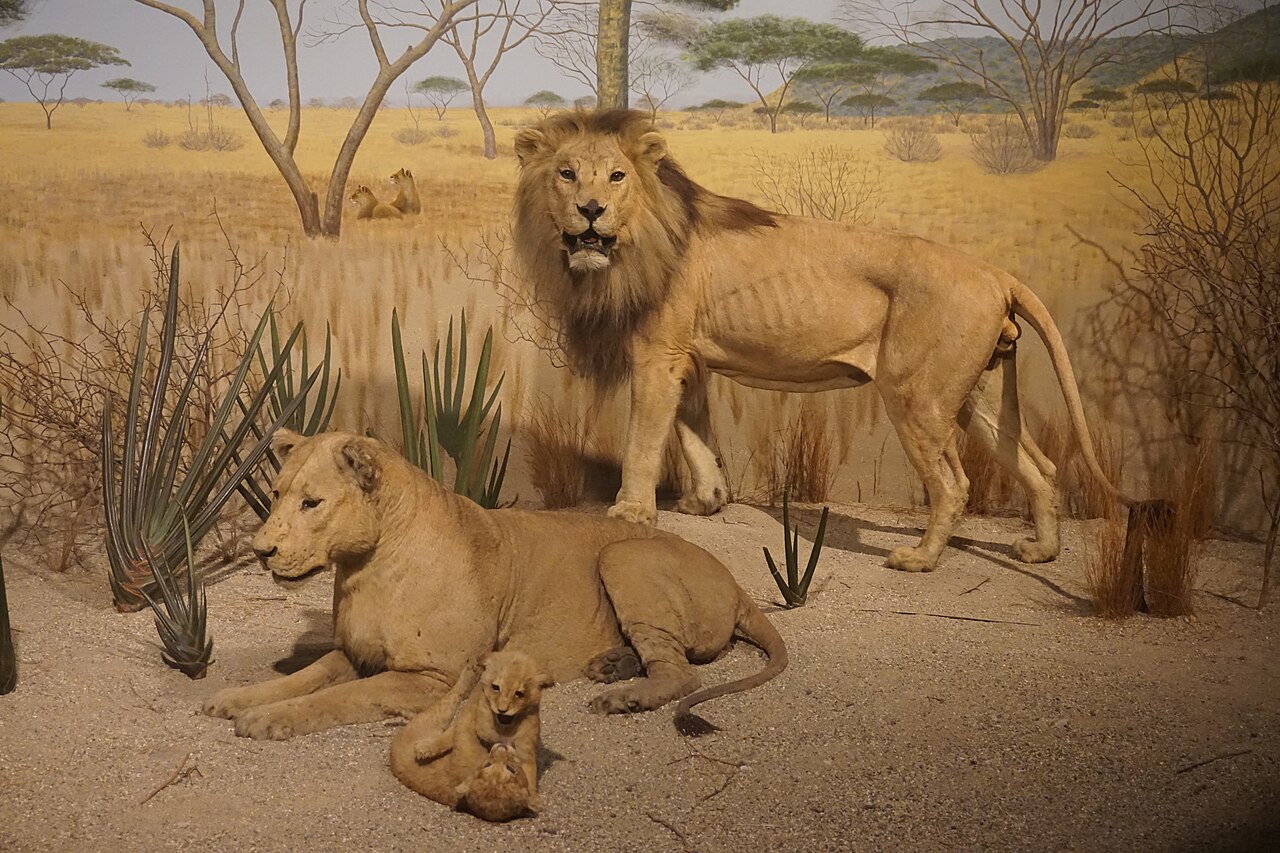
The lion. The only social cat, lives in groups called prides of 10 to 30 individuals. Found in about ten African countries, mostly in East and Southern Africa. Population: 20,000 to 25,000.
The leopard. More discreet and solitary. Lives throughout sub-Saharan Africa, from desert to dense forest. The most adaptable of the big cats. To tell it apart from cheetah and jaguar, see our guide to 50 animal species.
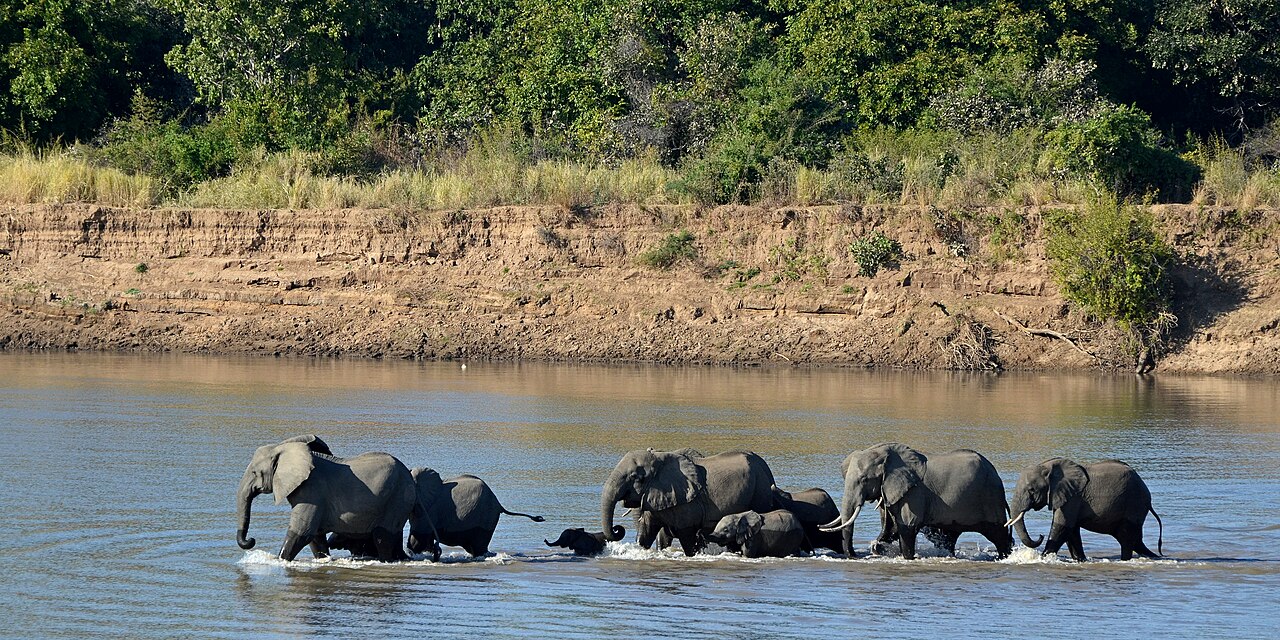
The savanna elephant. The largest land animal, up to 6 tons. Herds are matriarchal, led by the oldest female. Exceptional memory and intelligence.
The rhinoceros (black and white). Two species today: white rhino (the largest, 1.8 to 2.5 tons) and black rhino (1 to 1.4 tons, more aggressive). Heavily threatened by poaching.
The African buffalo. The most dangerous of the Big Five by human death count. Lives in large herds and aggressively defends the group.
Major carnivores beyond the Big Five
The cheetah. The savanna sprinter, 110 km/h peak. Recognizable by solid spots and the “tear lines” on the muzzle. Population: 7,100, declining.
The African wild dog. Each individual has a unique spotted coat. Highly intelligent socially, 80% hunt success rate, the best of any predator.
The spotted hyena. Not a primary scavenger as often thought, but an efficient predator that kills 70% of its own food. The strongest jaw of any land carnivore.
The caracal. Medium-sized cat with distinctive ears tipped with long black tufts. Jumps up to 3 meters in the air to catch birds.
The serval. Small spots and stripes, long legs, large ears. Mostly hunts rodents and birds.
The major herbivores
The giraffe. Tallest land mammal, up to 5.5 meters. Nine subspecies, some critically endangered. Black tongue 50 centimeters long to grab acacia leaves.
The zebra. Three species: plains zebra (the most common), mountain zebra and Grevy’s zebra (the largest, most threatened). Each zebra has a unique stripe pattern, like a fingerprint.
The wildebeest. Famous for its annual migration of 1.5 million individuals between the Serengeti (Tanzania) and the Masai Mara (Kenya). One of the greatest natural spectacles in the world.
The hippopotamus. More dangerous than it looks, 500 human deaths per year. For more, see our ranking of the most dangerous animals.
Antelopes. Huge diversity: impala (the most common in East Africa), Thomson’s gazelle, Grant’s gazelle, kudu, eland (the largest antelope, 700 kilos), oryx, springbok.
Primates
The mountain gorilla. Population of 1,063 individuals in 2024, spread across Rwanda, Uganda and DRC. A rare case of an increasing population.
The western lowland gorilla. More numerous but also more threatened, about 100,000 individuals.
The chimpanzee. Our closest genetic cousin (98.8% shared DNA). Lives in West and Central Africa.
The bonobo. Cousin of the chimp, more peaceful and matriarchal. Lives only in DRC.
The baboon. Five species, present across all of Africa. Lives in troops of 50 to 200 individuals.
The mandrill. The largest monkey, with its striking blue and red face. Lives in the forests of Gabon and Cameroon.
Desert species
The fennec fox. Small Saharan fox with huge ears to dissipate heat. Mascot of the Algerian football team.
The scimitar oryx. White antelope of the Sahel, nearly extinct in the wild, recently reintroduced in Chad.
The dromedary. One hump (different from the Asian bactrian camel with two). Can drink 200 liters in a few minutes.
The desert beetle. Collects water from morning fog thanks to specific bumps on its shell.
Emblematic birds
The ostrich. Largest bird in the world, 2.5 meters and 150 kilos. Fastest two-legged runner, 70 km/h.
The flamingo. Lives in colonies of millions in salt lakes (Natron, Magadi).
The African fish eagle. Distinctive call heard throughout sub-Saharan Africa, national symbol of several countries.
The secretary bird. A long-necked raptor that hunts on foot, specialist of snakes.
The marabou stork. Prehistoric-looking scavenger, over 2 meters wingspan.
Reptiles and amphibians
The Nile crocodile. Largest reptile in Africa, up to 6 meters. Found in almost all sub-Saharan countries.
The black mamba. One of the fastest snakes in the world (20 km/h) and the most venomous in Africa. But avoids confrontation whenever possible.
The Seychelles giant tortoise. Can live over 150 years, up to 250 kilos.
Notable insects and arthropods
The emperor scorpion. The largest scorpion in the world, up to 20 centimeters. Paradoxically, its venom is mildly dangerous to humans.
The tsetse fly. Vector of sleeping sickness, 10,000 deaths a year.
The termite mound. Builds mud towers over 7 meters tall, naturally ventilated.
What threatens African wildlife
African animal populations have dropped by 70% on average since 1970, according to WWF. Three causes dominate: habitat loss (urbanization, agriculture), poaching (mostly for ivory, horn and skins), and climate change. For the species at greatest risk, see our endangered species list.
SAPIRO offers quizzes covering 600 species across the animal kingdom, including about a hundred from Africa, with an explanation behind each answer.