
Italy holds a singular place in the history of European art and architecture. The country has the largest number of sites on the UNESCO World Heritage list, a legacy of ancient Rome, the medieval city-states and the Renaissance. Here are the monuments worth knowing, region by region.
Rome
The capital packs nearly three thousand years of history into a single skyline.
-
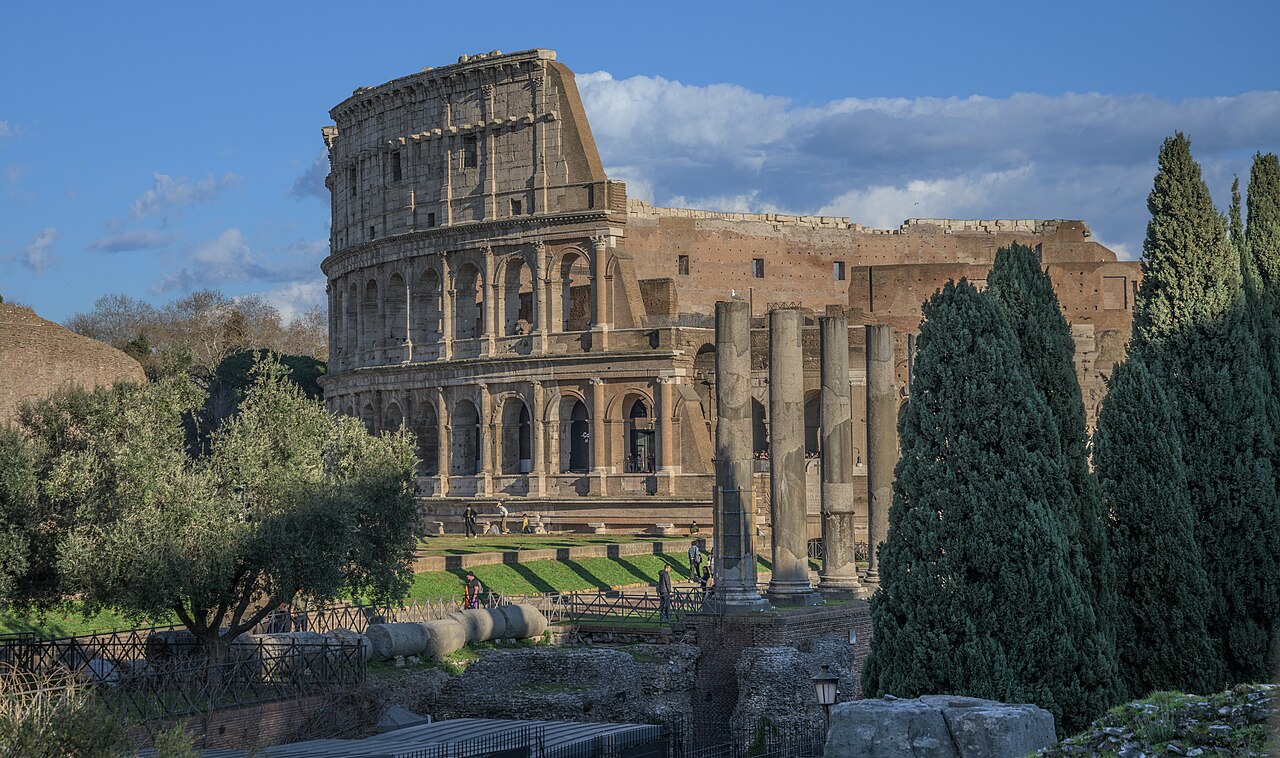
The Colosseum — Rome — Completed around AD 80, this amphitheatre could hold between 50,000 and 80,000 spectators for gladiator fights and animal hunts. It remains the largest amphitheatre the Romans ever built.
-
The Roman Forum and the Pantheon — Rome — The Forum was the political and religious heart of the ancient city; you can still make out temples, basilicas and triumphal arches. Nearby, the Pantheon, rebuilt under Hadrian in the 2nd century, keeps the largest unreinforced concrete dome in the world.
-
The Trevi Fountain — Rome — Finished in 1762, this Baroque fountain closes off a tangle of side streets with a theatrical scene of the god Oceanus. The custom of tossing a coin over your shoulder is a tourist ritual that refuses to fade.
The Vatican
The smallest sovereign state in the world holds two masterpieces of Christianity.
-
St Peter’s Basilica — Vatican City — Built over what tradition marks as the tomb of the apostle Peter, the present church dates from the 16th and 17th centuries. Bramante, Michelangelo and Bernini all worked on it; Michelangelo’s dome still defines the Roman skyline.
-
The Sistine Chapel — Vatican City — Michelangelo painted the ceiling between 1508 and 1512, then The Last Judgment on the altar wall around 1536-1541. It is now the site of the conclave, where cardinals elect the pope.
Florence and Tuscany
The cradle of the Renaissance, Tuscany lines up its landmarks within a short radius.
-
Santa Maria del Fiore Cathedral — Florence — The Duomo is crowned by Brunelleschi’s dome, completed in 1436. Its double-shell construction, built without a central scaffold, was an engineering feat for its time. It is still one of the largest masonry domes ever raised.
-
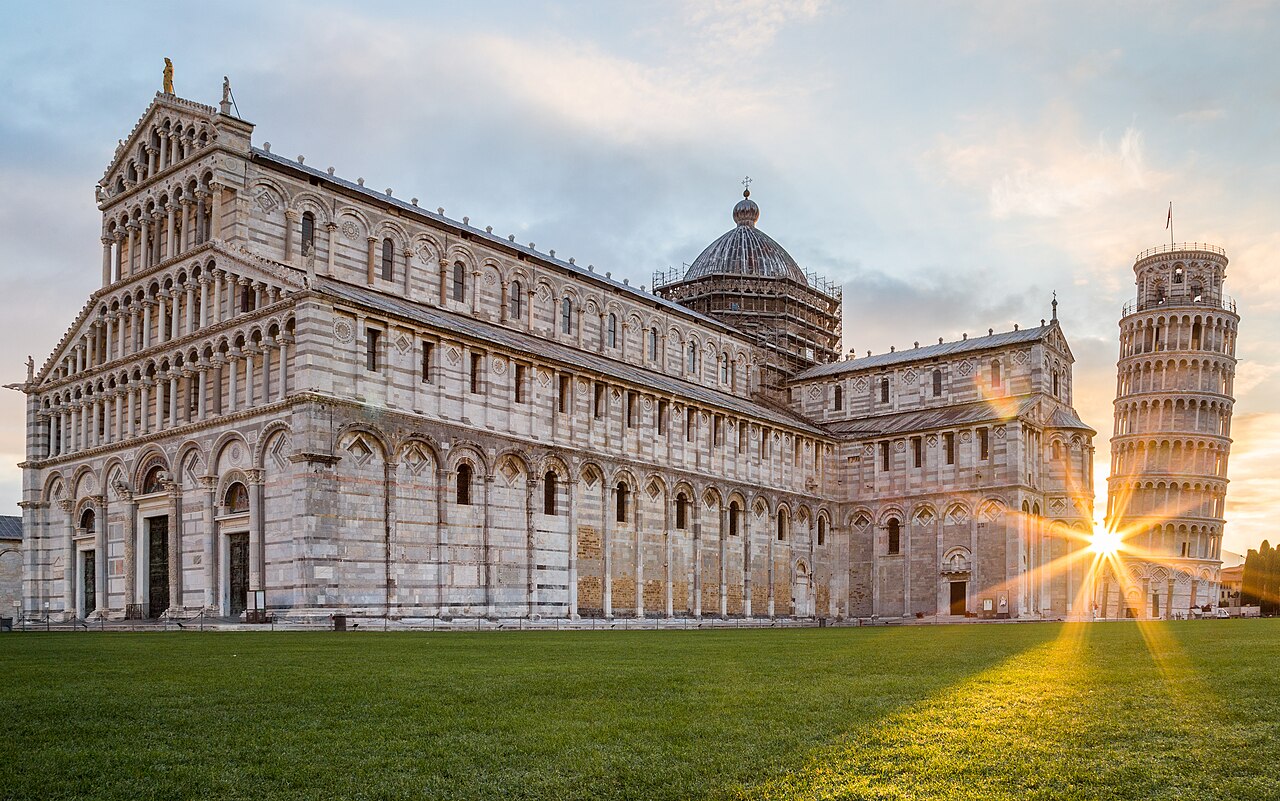
The Leaning Tower of Pisa — Pisa — This cathedral bell tower started tilting during construction, which began in 1173, because of unstable subsoil. The lean, which kept growing for centuries, was reduced to about four degrees after stabilisation work.
Venice and the North
Built on a lagoon, Venice is still a city without cars, where water takes the place of streets.
-
St Mark’s Square and its campanile — Venice — The only true “square” in the city brings together the Byzantine Basilica of St Mark and the Doge’s Palace. The campanile, nearly 99 metres tall, collapsed in 1902 and was rebuilt as it was ten years later.
-
The Rialto Bridge — Venice — The oldest of the bridges crossing the Grand Canal, in the stone version finished in 1591. Its single broad arch lined with shops makes it one of the most photographed viewpoints in the city.
Ancient remains
Beyond the major cities, Italy preserves remarkable archaeological sites.
- Pompeii — near Naples — The city was buried under ash when Vesuvius erupted in AD 79, which froze streets, houses, frescoes and everyday objects in place. The excavations, begun in the 18th century, give the fullest picture we have of an ordinary Roman town.
If you enjoy testing what you know about these places, the SAPIRO app offers general-knowledge quizzes where history and heritage come up often. To dig deeper, browse our monuments guide or our pick of the 30 famous monuments of the world. And if Europe is your thing, compare with the monuments of France and the monuments of Spain.
Frequently asked questions
What is the most visited monument in Italy?
Rome’s Colosseum ranks among the country’s busiest sites, drawing several million visitors a year. The Vatican Museums, which lead to the Sistine Chapel, compete with it at the top of the list.
Why does Italy have so many UNESCO sites?
Italy holds the largest number of World Heritage sites on the UNESCO list, the result of a dense history: ancient Rome, medieval city-states and Renaissance hubs left a heritage spread across the whole country.
Does the Tower of Pisa really lean?
Yes. The Pisa bell tower has leaned since it was built in the 12th century, because of soft ground. Engineering work in the 1990s and 2000s stabilised the tilt, now around four degrees.
Can you visit Pompeii in a day?
Yes, though the site is large. A day is enough to see the forum, the amphitheatre and the main houses. Keen visitors often pair Pompeii with Herculaneum, which is better preserved but smaller.