
People tend to mix up castle and palace, fortress and pleasure house. Behind those words lies the whole history of the architecture of power, from the defensive keep to the residence built purely for show. Here are the most famous, continent by continent, with what makes each one recognisable.
Europe
Europe holds the highest density of castles in the world, a legacy of centuries of feudalism, dynastic wars and rival courts.
-
Palace of Versailles — France — French classical, 17th century. Once a hunting lodge of Louis XIII, transformed by Louis XIV into a symbol of absolute monarchy. Its Hall of Mirrors, 73 metres long, and its gardens laid out by Le Nôtre became the model for courts across Europe, under the European monarchs who held court here until the Revolution.
-
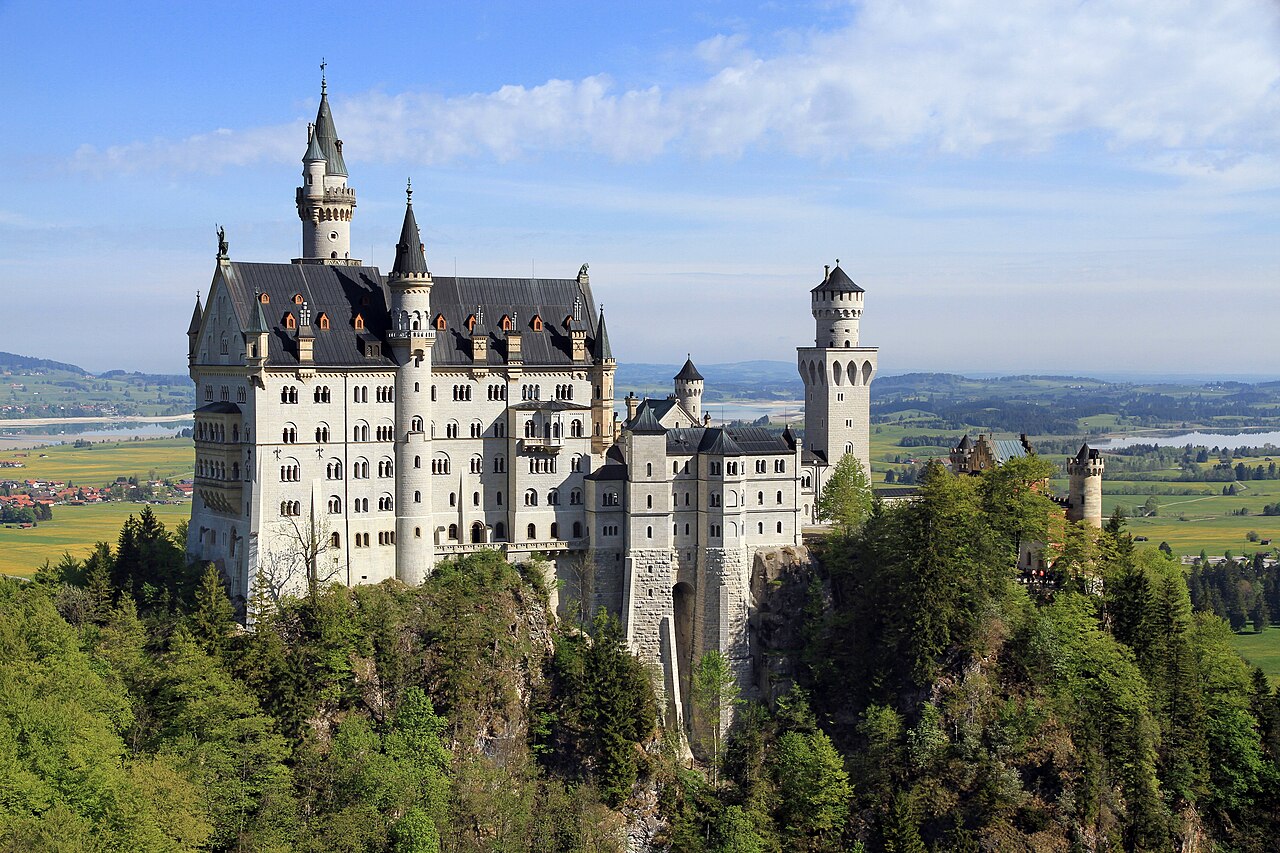
Neuschwanstein — Germany — neo-Romanesque, 19th century. Perched in the Bavarian Alps, commissioned by Ludwig II of Bavaria from 1869. It is a stage set as much as a castle: the king recreated an idealised Middle Ages, drawing on Wagner’s operas. It was never finished.
-
Windsor Castle and Buckingham Palace — United Kingdom. Windsor, founded by William the Conqueror in the 11th century, is the oldest inhabited castle in Europe still in use. Buckingham Palace, in London, has been the monarch’s official residence since 1837; its current façade dates from the early 20th century.
-
Schönbrunn — Austria — Baroque, 18th century. The Habsburgs’ summer residence in Vienna, with its more than 1,400 rooms and formal French gardens. It was here that a six-year-old Mozart is said to have played before Empress Maria Theresa.
-
Alhambra of Granada — Spain — Nasrid Islamic art, 13th-14th century. The palace-fortress of the last Muslim emirs of the peninsula. Carved stucco, muqarnas ceilings, the Court of the Lions and its water features make it the masterpiece of Moorish architecture in Europe, inscribed on the UNESCO World Heritage List.
-
Topkapi Palace — Turkey — Ottoman architecture, 15th century. Home to the sultans for nearly four hundred years, overlooking the Bosphorus in Istanbul. It is not a single building but a maze of courtyards, pavilions and gardens, including the famous harem.
-
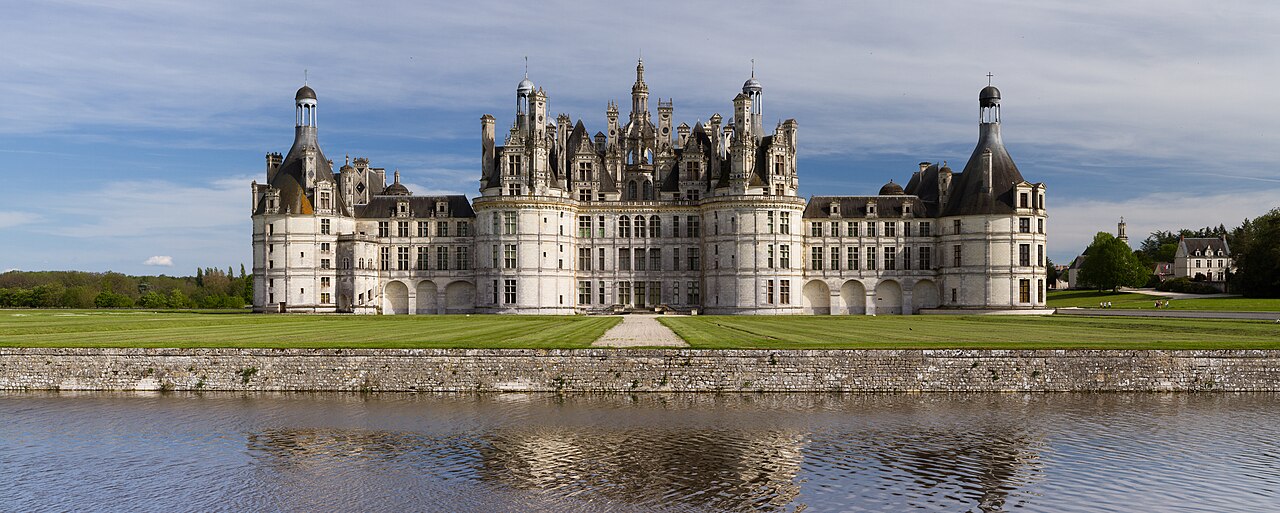
Châteaux of the Loire Valley — France — Renaissance, 15th-16th century. A whole valley of royal and noble residences: Chambord with its double-helix staircase tied to the spirit of Leonardo da Vinci, Chenonceau spanning the Cher, Azay-le-Rideau, Blois. The shift from fortress to pleasure house reads plainly here.
-
Peterhof — Russia — Baroque, 18th century. Nicknamed the “Russian Versailles”, on the Gulf of Finland near Saint Petersburg. Peter the Great installed a cascade of fountains that runs without a single pump, on gravity alone.
Asia
Asian palaces follow a different logic: sacred axes, cosmic symbolism, timber rather than stone.
-
Forbidden City — China — Ming and Qing imperial architecture, 15th century. At the heart of Beijing, it served as the emperors’ palace from 1420 to 1912. Roughly 980 buildings across some 72 hectares, arranged along a strict north-south axis. Its name comes from the ban on entering without imperial permission.
-
Potala Palace — Tibet — Tibetan architecture, 17th century. Rising on a hill in Lhasa, at over 3,700 metres above sea level, it was the residence of the Dalai Lamas. Thirteen storeys, more than a thousand rooms, at once palace, monastery and fortress.
-
Himeji Castle — Japan — Japanese castle, 17th century. Nicknamed the “White Heron” for its immaculate walls and slender outline. It is the best-preserved castle in Japan, having survived the bombings of 1945 and several earthquakes. Its main keep has seven internal levels beneath a five-storey appearance.
-
Mysore Palace — India — Indo-Saracenic style, early 20th century. Seat of the Wadiyar dynasty, rebuilt after a fire in 1912. A blend of Mughal arches, domes and stained glass. During the Dasara festival its façade lights up with tens of thousands of bulbs.
Telling apart fortress, pleasure castle and palace
Three words, three realities. The fortified castle is a military work of the Middle Ages: people live there, but defence comes first. Thick walls, a keep, moats, a drawbridge. Early Windsor or the Loire strongholds before their makeover belong here.
The pleasure castle appears once gunpowder makes fortifications obsolete. The residence then opens outward: large windows, gardens, ceremonial staircases. Chambord and Chenonceau are the perfect examples.
The palace, finally, is by definition an urban and princely residence with no defensive role. The word comes from the Palatine Hill in Rome, where the emperors lived. Buckingham, Schönbrunn and Topkapi are palaces, not castles. English usage stays loose (we still say “Versailles château” even though it is technically a palace), but the root distinction holds: a castle protects, a palace impresses.
To turn all these names into instant recall, the SAPIRO app offers quizzes on the world’s monuments that train your memory without rote learning. To go further, read our tour of France’s monuments, our walk through the monuments of Paris and our selection of UNESCO World Heritage Sites. It all sits in the monuments section.
Frequently Asked Questions
What is the difference between a castle and a palace?
A castle is, at its origin, a fortified residence built for defence: thick walls, towers, moats, arrow slits. A palace has no defensive purpose; it is a grand urban or princely residence built for comfort and display. The word palace comes from the Palatine Hill in Rome, where the emperors lived. In English usage the line often blurs, but the root meaning is clear: a castle protects, a palace impresses.
What is the largest palace in the world?
The Forbidden City in Beijing is usually described as the largest palace complex in the world, covering around 720,000 square metres with roughly 980 buildings spread across 72 hectares. The Palace of the Parliament in Bucharest is the largest administrative building on earth, but it was never a royal residence.
Why is Neuschwanstein Castle so famous?
Built from 1869 for King Ludwig II of Bavaria, Neuschwanstein is a neo-medieval castle raised at the very moment when fortified castles had lost all military use. Its fairy-tale silhouette is widely said to have inspired the castle in Disney parks, which helped make it one of the most photographed buildings in Europe.
Can you still visit Buckingham Palace?
Yes, but only in part. The State Rooms of Buckingham Palace, the official London residence of the British monarch, open to the public during certain months, usually in summer. Windsor Castle, which is much older, can be visited across most of the year.