Some animal pairs look identical at first glance. Often it is due to a biological phenomenon called convergent evolution: unrelated species develop similar traits because they live in similar conditions. Here are 20 classic pairs with the criteria that let you decide at a glance.
Spotted cats
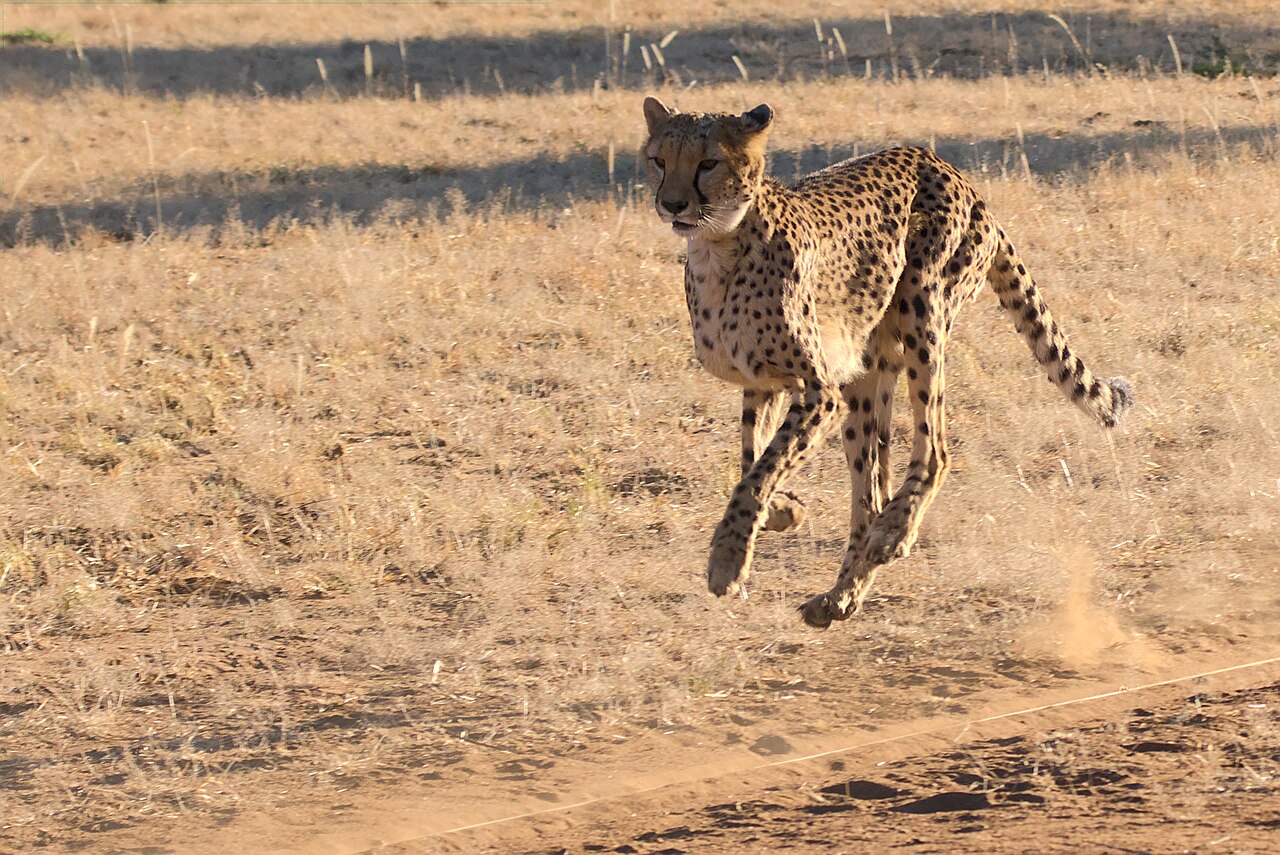
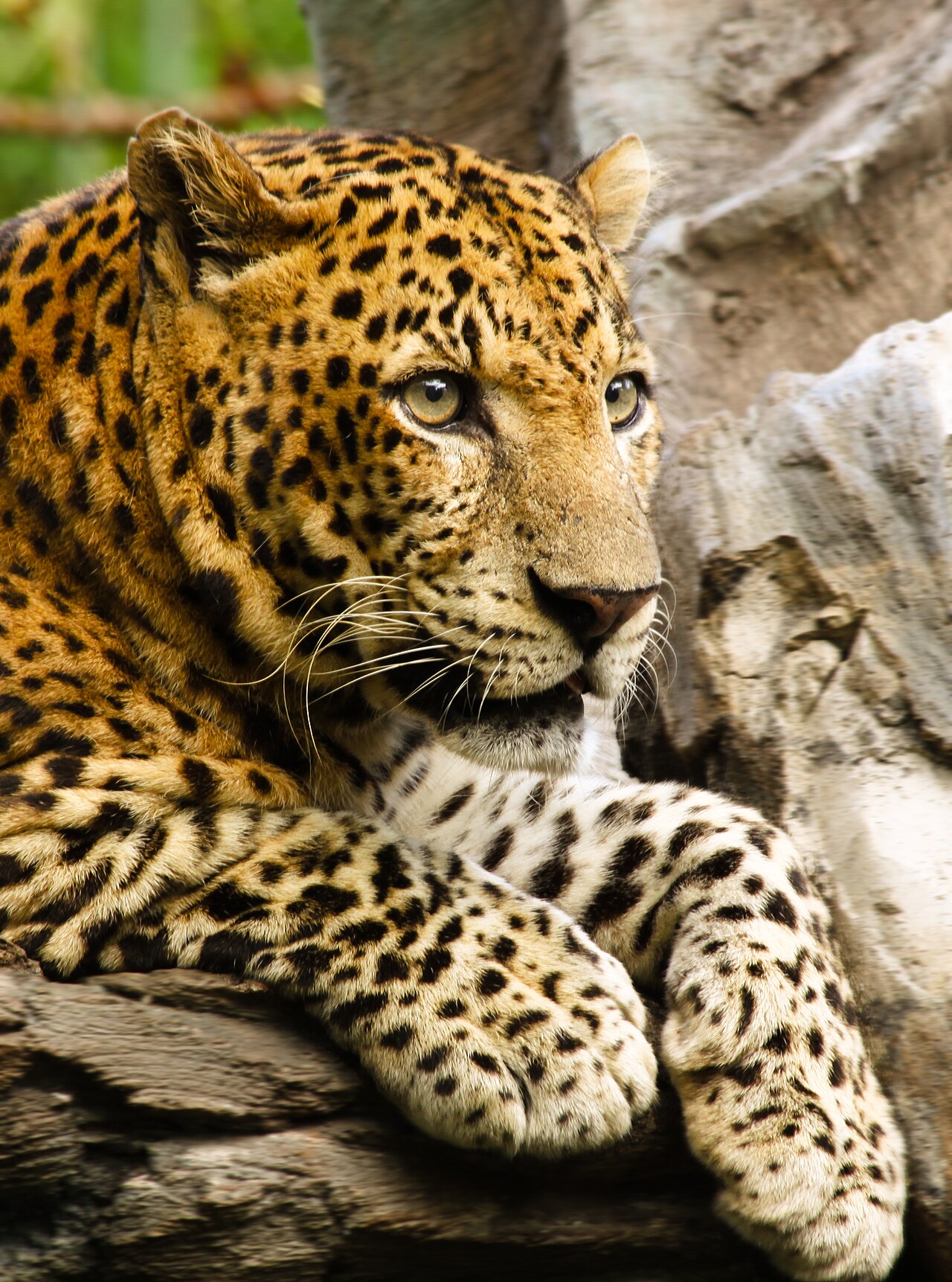
Cheetah, leopard, jaguar.
The cheetah has solid spots (no rosettes), a slim body, and black “tear lines” under the eyes. Lives in Africa and Iran.
The leopard has rosettes (flower-shaped spots with a tawny center). Stockier build. Lives in Africa and Asia. Climbs trees.
The jaguar has rosettes with small black dots inside. More massive than the leopard, nearly twice the weight. Lives in South America.
Memory trick: leopArd and cheetAh = Africa, jaguAr = AmAzon.
Crocodile and alligator
Four criteria that never fail.
The snout: narrow V for the crocodile, rounded U for the alligator.
The teeth: the fourth lower tooth always sticks out in the crocodile, never in the alligator (which looks toothless on the bottom when its mouth is closed).
Habitat: the crocodile lives in Africa, Asia, Australia, the Americas. The alligator lives in the Americas (US, plus one species in China).
Color: olive-green crocodile, gray-black alligator.
Llama, alpaca, vicuna, guanaco
Four South American camelids often confused.
The llama is the largest (1.2 meters at the shoulder), with long banana-shaped curved ears.
The alpaca is smaller, with a round head and short straight ears. Its wool is very fine.
The vicuna is even smaller and lives wild at high altitude. Its wool is the finest and most expensive in the world.
The guanaco is the wild ancestor of the llama. More athletic, rarer.
Husky, malamute, samoyed
Three Nordic dogs that look alike.
The husky often has blue or heterochromatic eyes. 20 to 27 kilos. Marked facial mask.
The malamute is bigger (30 to 40 kilos), with always brown eyes. Wider head, shorter snout.
The samoyed has an immaculate white coat and a characteristic “smile.”
For more, see our dog breed guide.
Dolphin and porpoise
The dolphin has a long beak-like snout and conical teeth.
The porpoise has a round head with no defined snout and spade-shaped teeth.
The porpoise is also clearly smaller (1.5 m versus 2 to 4 m) and much more discreet.
Whale and sperm whale
The blue whale is gigantic (30 meters, 170 tons), filters plankton with baleen plates, has no teeth.
The sperm whale has a huge square head, teeth (only in the lower jaw), 18 meters max. It hunts giant squid down to 2,000 meters.
Puffin and penguin
The puffin flies, lives in the Northern Hemisphere (North Atlantic), 30 to 80 cm.
The penguin does not fly, lives in the Southern Hemisphere (down to the pole), 30 cm to 1.20 m depending on species.
In some languages, the same word covers both, which adds to the confusion.
Tortoise and sea turtle
Land tortoises have column-shaped legs (like miniature elephants), a domed shell, live on land.
Sea turtles have flat flippers, a flattened shell for hydrodynamics, cannot retract their head.
Freshwater turtles (pond turtles) are intermediate: webbed feet, flat shell, but can retract the head.
Owls (eared vs not)
In English the distinction is mostly informal. “Eared owls” have feathered tufts on the head that look like ears (great horned owl, long-eared owl).
Non-eared owls (barn owl, tawny owl) lack these tufts.
The tufts are decorative feathers, not real ears. The actual ear openings are hidden under the facial disc.
Crow and raven
The raven is larger (60 to 70 cm), with a thicker beak, a diamond-shaped tail in flight, and a deep “kroaa” call.
The crow is smaller (45 to 50 cm), with a rectangular tail in flight, and a higher-pitched “kraa” call.
Rabbit and hare
The hare is larger, with longer ears and more powerful hind legs. Lives above ground, does not dig burrows. Young are born with eyes open and fur.
The rabbit is smaller, lives in groups in burrows. Young are born blind and hairless.
Monkey and ape
Monkeys (macaques, baboons, capuchins) have a tail, are smaller, walk on four legs.
Apes (gorilla, chimpanzee, bonobo, orangutan, gibbon) have no tail, are larger, can walk upright. Humans biologically belong to the apes.
Termite and ant
Termites have a uniform cylindrical body, no narrow waist. Workers are white.
Ants have a very marked waist between thorax and abdomen. Always pigmented.
Evolutionarily, termites are closer to cockroaches than to ants.
Butterfly and moth
The butterfly (day) folds its wings vertically at rest, has club-shaped antennae.
The moth (night) folds its wings flat or roof-shaped, has feathery or thread-like antennae.
Tarantula (real vs colloquial)
The wolf spider tarantula is a European species (southern Italy, Spain) whose bite is not deadly. Lycosidae family.
What Americans call “tarantulas” are actually mygalomorph spiders, large tropical species. Theraphosidae family.
Salmon and trout
Adult Atlantic salmon has a slimmer profile, lives at sea and goes upriver to spawn, can reach 20 kilos.
The trout is smaller and lives its whole life in fresh water (except sea trout, which is a particular form). Speckled with black.
How to stop mixing them up
Three techniques work. Pair comparison (always learn two species together). Identification by a single discriminating trait. Geographic anchoring (which continent, which habitat).
Worth reading: 50 animal species worth knowing and the one on dog breeds. SAPIRO offers quizzes on 600 species, including many tricky pairs, with an educational explanation behind each answer.