
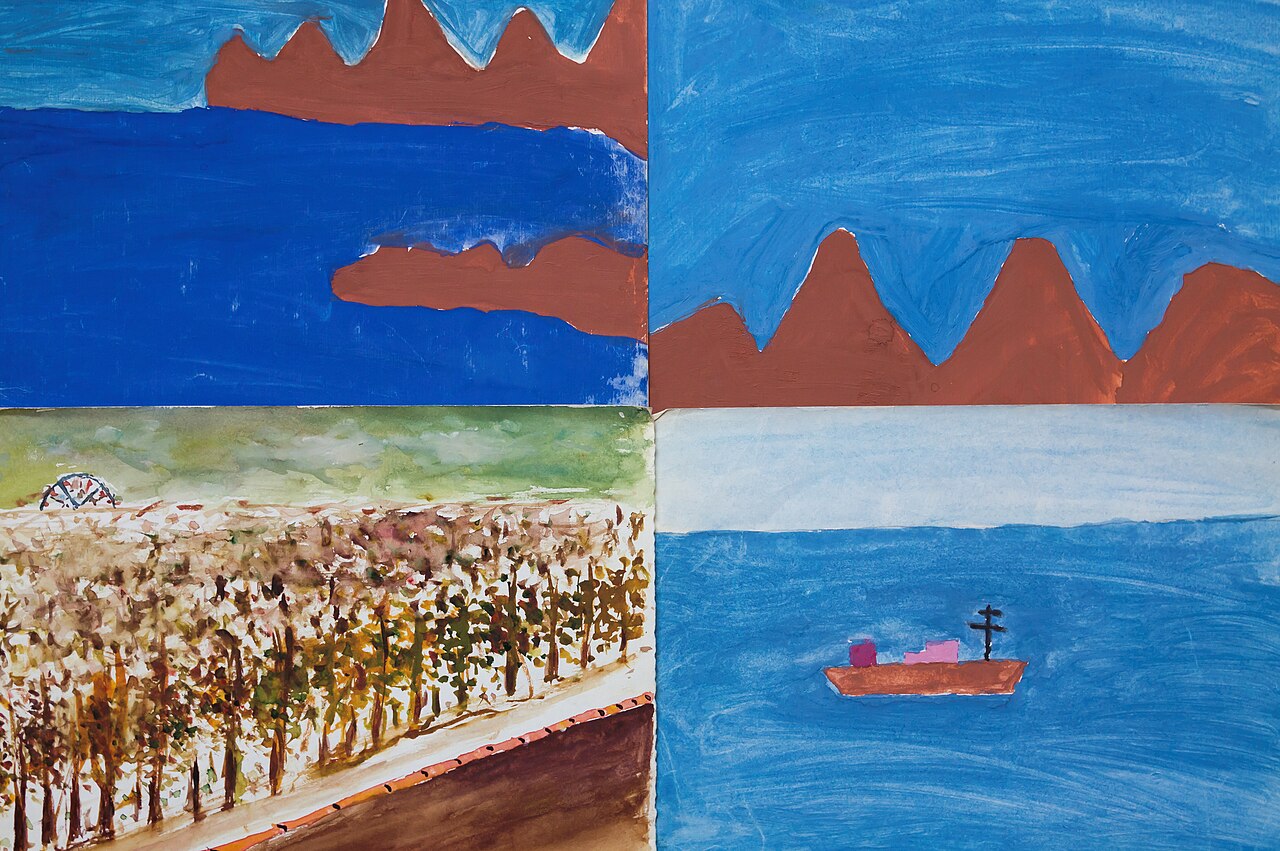
Introducing art to a child is one of the finest gifts possible. Not to make them an art historian, but to give them an open eye on the visual world for life. Here is how to do it.
3 to 5 years: seeing and touching
At this age, the child learns through senses. The goal is not to know, it is to look.
Activities. Read illustrated books. Visit museums for 30 minutes max. Draw together. Recreate a famous painting with crayons.
Works to show. Bright colors and simple forms: Van Gogh (Sunflowers), Matisse (cutouts), Mondrian, Klee. Avoid complex works.
6 to 8 years: naming and comparing
The child can match a work to a painter. This is the age of first discoveries by pairs: Monet vs Van Gogh.
Pivot works. Mona Lisa (Leonardo), Sunflowers (Van Gogh), Les Demoiselles d’Avignon (Picasso). See our list of 30 famous paintings.
Activities. Simple attribution quizzes (who painted what?). Museum visits up to 1 hour, with a goal (find that specific work).
9 to 11 years: place in history
The child can place a painting in an era. Renaissance, Impressionism, modern art become usable categories.
Concepts to introduce. See our guide to art movements for chronology.
Activities. Home timeline. One work per century displayed. Longer visits with adapted audio guide.
12 and up: analyzing
The child can begin to analyze composition, technique, message. This is the age of real art history.
Concepts to introduce. Sfumato, perspective, chiaroscuro, impasto, abstraction. See our art history beginners guide.
Activities. One museum a month. Read a short artist biography (Van Gogh, Frida Kahlo accessible). Regular art quizzes.
Effective method
Three principles.
Consistency beats intensity. Better fifteen minutes a day than a big monthly session.
Tie to experiences. A trip to Florence after talking about the Renaissance. A visit to a modern art museum after talking about Impressionism.
Quizzes to anchor memory. The science of active learning shows kids retain 50% better with quizzes. SAPIRO offers 553 art works with explanations.
Mistakes to avoid
Forcing it. A child dragged through a museum hates art. Better a short enthusiastic visit than a long forced one.
Hierarchizing. “You must love Leonardo.” Not at all. Every child finds their favorites. The parent’s role is to present, not dictate.
Snobbery. Contemporary art is not “incomprehensible.” Kids often appreciate it more than adults: abstraction and colors speak to them directly.
Worth reading: essential artworks to know and geography as a family.