
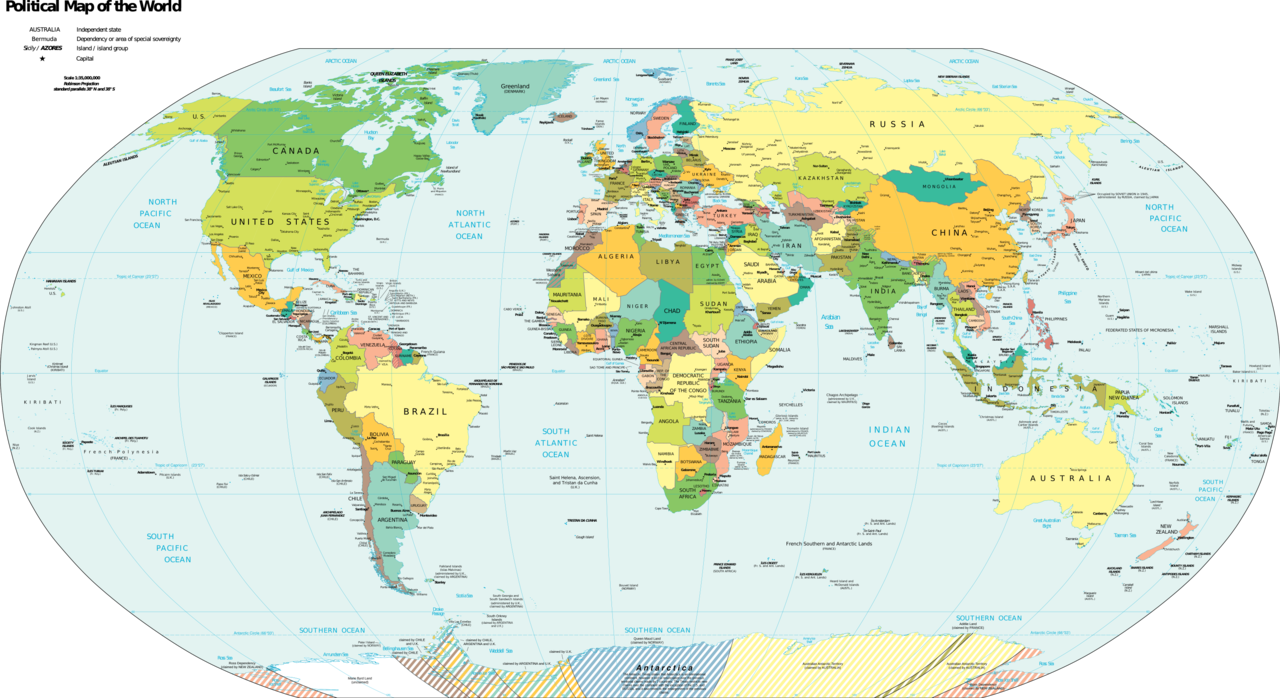
There are 195 countries in the world by the most common count: the 193 member states of the UN, plus 2 observer states (the Vatican and Palestine). But 193, 197 or even 249 are perfectly defensible answers: it all depends on who is counting, and by what criterion. Here is each figure and what it covers.
The possible counts
| Figure | Criterion | Who uses it |
|---|---|---|
| 193 | UN member states | The UN |
| 195 | UN + 2 observers | The most common count |
| 197 | + Kosovo and Taiwan | Many atlases and apps, including SAPIRO |
| 206 | Olympic committees | The IOC |
| 211 | Football associations | FIFA |
| 249 | Territory codes | ISO 3166-1 standard |
193: the UN member states
This is the baseline of every count. The most recent admission is South Sudan, in 2011; no new member since. Switzerland, often cited as an odd case, only joined in 2002, after decades of deliberate neutrality outside the UN.
195: the most quoted figure
Add the 2 permanent observer states: the Vatican (Holy See) and Palestine. They take part in General Assembly debates without voting rights. This is the expected answer in most quizzes and exams.
197: counting Kosovo and Taiwan
Two states are full-fledged countries in practice without sitting at the UN. Kosovo, independent since 2008, is recognized by around a hundred states. Taiwan has its own government, currency and army, but fewer than fifteen states recognize it officially, as China considers the island one of its provinces. This count of 197 is the one SAPIRO uses, to cover every territory that governs itself.
206, 211, 249: sport and codes
The IOC recognizes 206 Olympic committees: Puerto Rico and the Cook Islands march at the Games without being independent states. FIFA federates 211 associations: England, Scotland, Wales and Northern Ireland each play under their own jersey. And the ISO 3166-1 standard assigns 249 codes, because it includes dependent territories such as French Polynesia and Greenland.
The borderline cases
A handful of territories have proclaimed independence without broad recognition: Somaliland, Transnistria, Abkhazia, South Ossetia and Northern Cyprus. No serious count includes them, yet they do administer their territory. The details are in our article on unrecognized countries.
Can the figure still change?
Yes. South Sudan brought the total to 193 in 2011, and the next serious candidate is Bougainville: this island in Papua New Guinea voted 98% for independence in its 2019 referendum. The recent history of the newest countries in the world shows the map is still moving, and the list of countries that no longer exist is a reminder that it moves both ways. For perspective, those 195 countries come in very different sizes: the ten smallest countries in the world would fit together inside half of Corsica.
Frequently asked questions
How many countries are there in the world in 2026?
195 by the most common count: 193 UN member states plus 2 observer states, the Vatican and Palestine. Adding Kosovo and Taiwan brings the total to 197.
Why do people say 193 sometimes and 195 other times?
193 counts only UN member states. 195 adds the 2 permanent observers (the Vatican and Palestine), which take part in debates without voting.
What is the most recently created country?
South Sudan, independent since July 9, 2011, after a referendum approved by nearly 99% of voters. It is the 193rd and most recent state admitted to the UN.
Is Taiwan a country?
Taiwan has a government, a currency, an army and 23 million inhabitants, but fewer than fifteen states recognize it officially and it does not sit at the UN. So the answer depends on the criterion: in practice, yes; in international law, it is disputed.
Why does FIFA count more countries than the UN?
FIFA federates 211 football associations, including nations without an independent state: England, Scotland, Wales and Northern Ireland each play under their own colors while forming a single UN member state, the United Kingdom.